What Is a 5-Way Binding Post? A Practical Guide
Learn how a 5-way binding post works, which wire terminations it accepts, and what engineers should check when specifying speaker terminals.
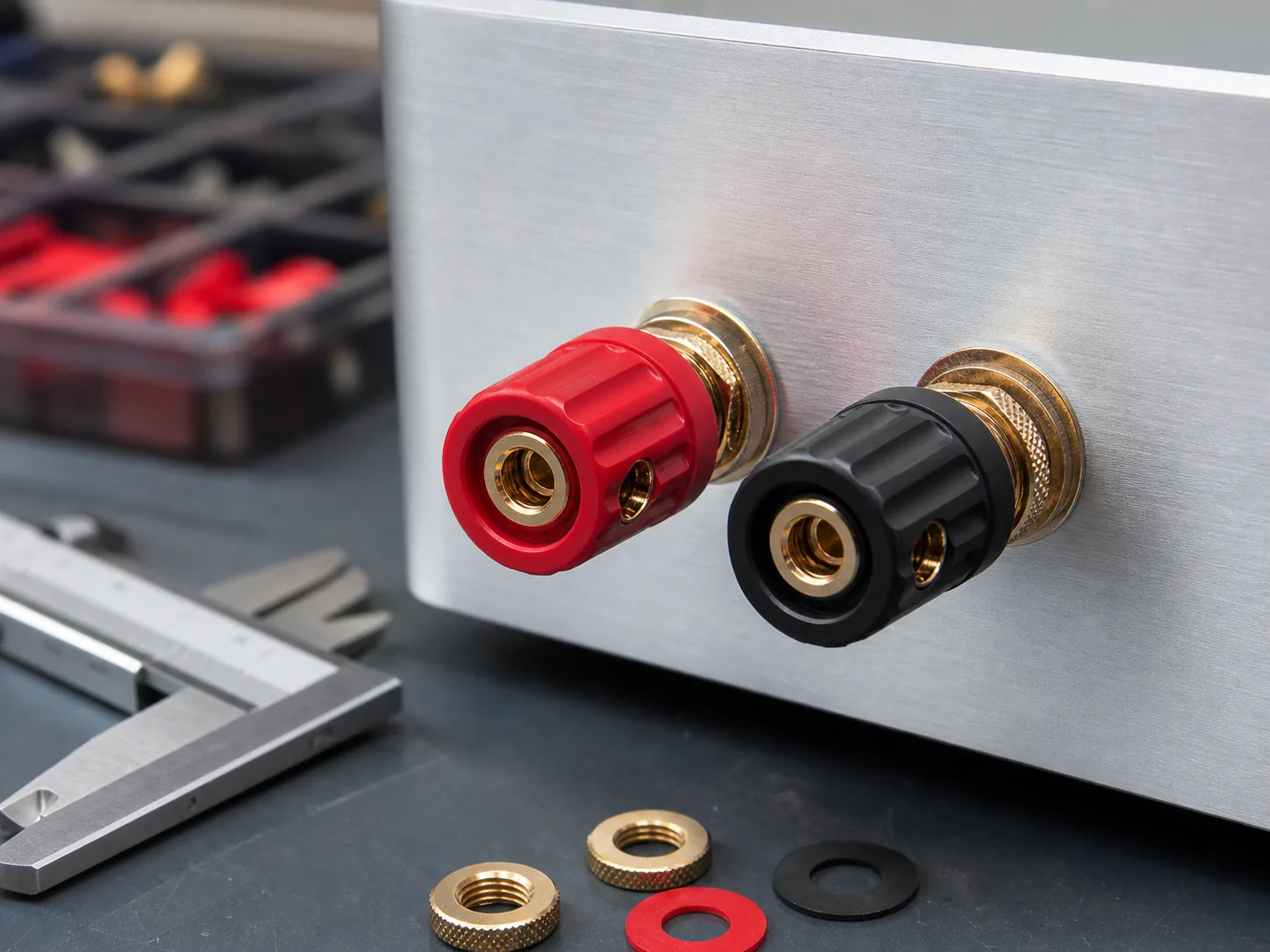
A 5-way binding post is a panel-mounted electrical terminal designed to accept several common wire termination methods. It is widely used on loudspeakers, amplifiers, power supplies, test equipment, and other products that need a secure connection that can also be disconnected without special tools.
The name “5-way” does not mean the post has five electrical circuits. It refers to the different ways a cable can connect to one terminal. That flexibility is useful for product manufacturers because one terminal design can support several installation preferences and regional markets.
Which Connections Does a 5-Way Binding Post Accept?
A typical 5-way binding post can be used with:
- 4mm banana plugs inserted into the end socket.
- Spade connectors clamped beneath the tightening cap.
- Bare wire through the cross hole in the threaded post.
- Bare wire wrapped around the post and secured by the cap.
- Pin connectors inserted through the side opening or clamped beneath the cap, depending on the design.
Not every product marketed as a 5-way binding post supports each method equally well. Cap geometry, cross-hole position, insulation spacing, thread length, and panel thickness all affect how the terminal works in the finished equipment.
For a production design, the drawing matters more than the product name.
The Main Parts of a Binding Post
Although the outside shape varies, most binding posts contain the same functional elements.
Conductive body
The central metal body carries current between the internal connection and the external cable. Copper and brass are common material families, but the exact grade and construction should be confirmed with the supplier rather than inferred from appearance.
Threaded cap
The cap creates clamping force for bare wire and spade connectors. Its thread fit, grip shape, and travel determine whether the connection feels smooth and remains secure during repeated use.
Insulation components
Plastic or nylon parts isolate the conductive post from the mounting panel and help identify polarity. Red and black are common for speaker and power connections, while custom colors may be used for multi-channel equipment.
Rear termination
The internal end may use a solder tab, threaded stud, nut, PCB interface, or another custom connection. This detail must match the assembly process inside the equipment.
Material and Plating Choices
Material selection affects conductivity, machinability, mechanical strength, cost, and plating performance. A supplier may offer copper-based or brass-based constructions, but buyers should ask for the actual material specification and confirm which parts of the assembly use that material.
Common surface finishes include gold-colored plating, rhodium-colored plating, nickel-based finishes, and unplated or specially treated surfaces. Finish selection should be based on the operating environment, contact design, appearance target, and validation requirements, not on color alone.
For an OEM project, request a clear bill of materials and a plating specification before approving samples.
What Engineers Should Check Before Ordering
Start with the interface around the terminal, not just the terminal itself.
- Panel thickness: determines the required mounting length.
- Mounting hole: must match the insulating shoulder and hardware.
- Terminal spacing: needs enough clearance for plugs, spades, and fingers.
- Wire termination: confirm banana plug, spade, bare-wire, and rear connection requirements.
- Polarity colors: define red, black, or custom color arrangements.
- Material specification: identify the conductive parts and acceptable material grades.
- Surface finish: define appearance, coating requirements, and verification method.
- Assembly torque: confirm how the terminal is mounted without damaging insulation.
- Packaging: prevent plated surfaces from rubbing during transport.
If the binding post is part of a new enclosure, send the supplier a panel drawing or 3D model. That is usually more reliable than choosing a terminal from a photograph.
Binding Posts for Audio and Industrial Equipment
Speaker and amplifier manufacturers often prioritize panel fit, cable compatibility, visible finish, and consistent left/right color matching. Industrial and laboratory equipment may place more emphasis on mounting strength, repeatable connection, insulation geometry, and compatibility with test leads.
The same basic component can serve both markets, but the acceptance criteria may be different. A terminal that suits an amplifier panel is not automatically suitable for a power supply or battery test fixture.
Standard Product or Custom Design?
A standard binding post is a sensible starting point when its mounting dimensions, rear termination, materials, and finish already match the equipment. Custom development becomes useful when the project requires:
- A non-standard panel or thread configuration
- A specific cap shape or brand appearance
- Custom insulation geometry or color
- A special rear connection
- A defined copper or brass component structure
- Integration with other machined terminal parts
Custom work should begin with a drawing review, followed by samples and application-specific validation before volume production.
Next Step for an OEM Project
Review our speaker binding post options, compare related banana plugs, or examine our CNC manufacturing capabilities.
If you already have a drawing, panel layout, reference sample, or finish requirement, send the project details for a sample or quotation. Include the intended application, estimated quantity, mounting dimensions, material preference, and required cable interfaces.