Typical use
Speaker cable assemblies, amplifier outputs, binding post interfaces, industrial power links, and private-label terminal hardware
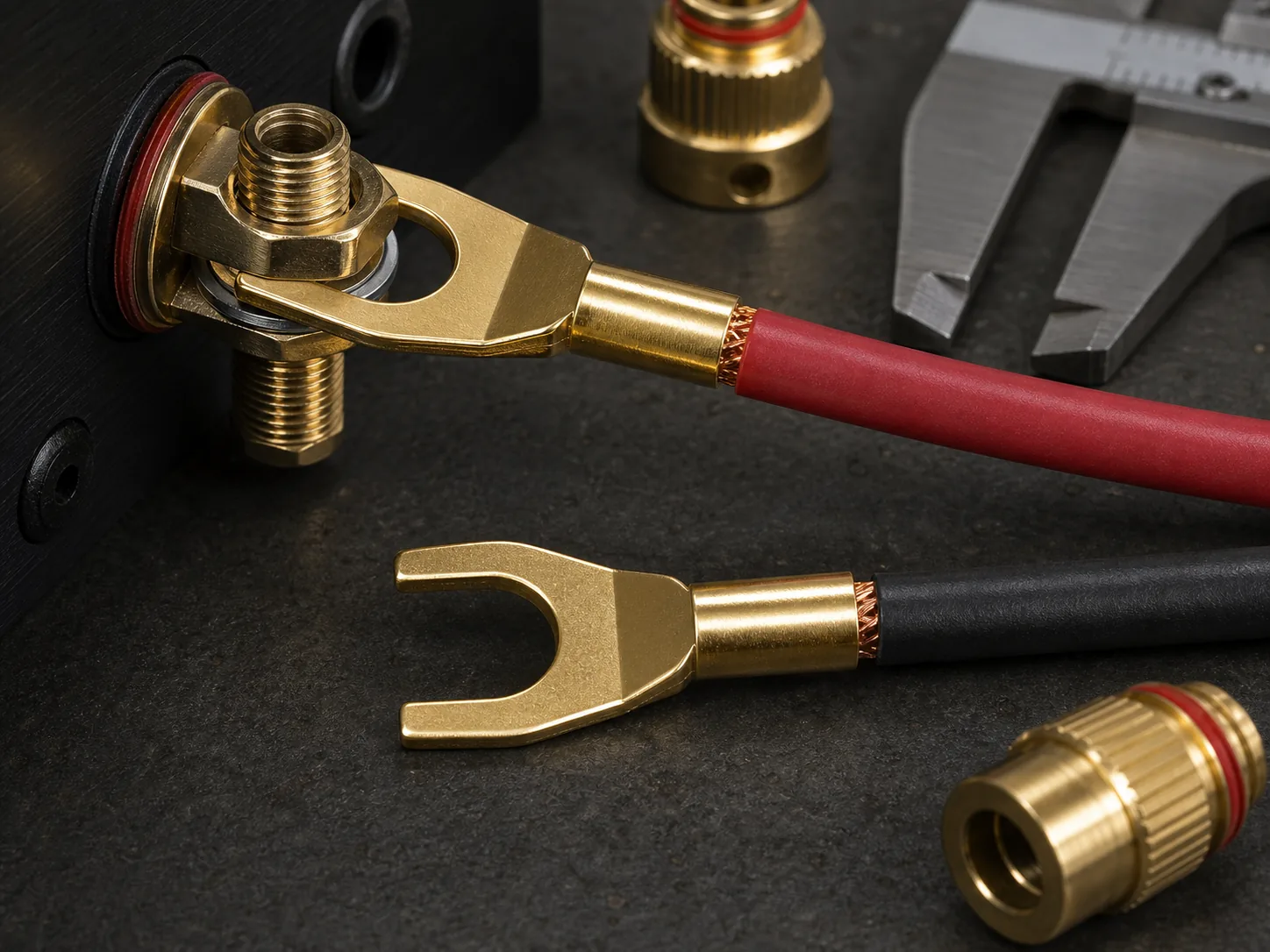
Spade Connector Evidence Images
These evidence images show fork geometry, mating post fit, cable interface, finish route, inspection, and RFQ context.
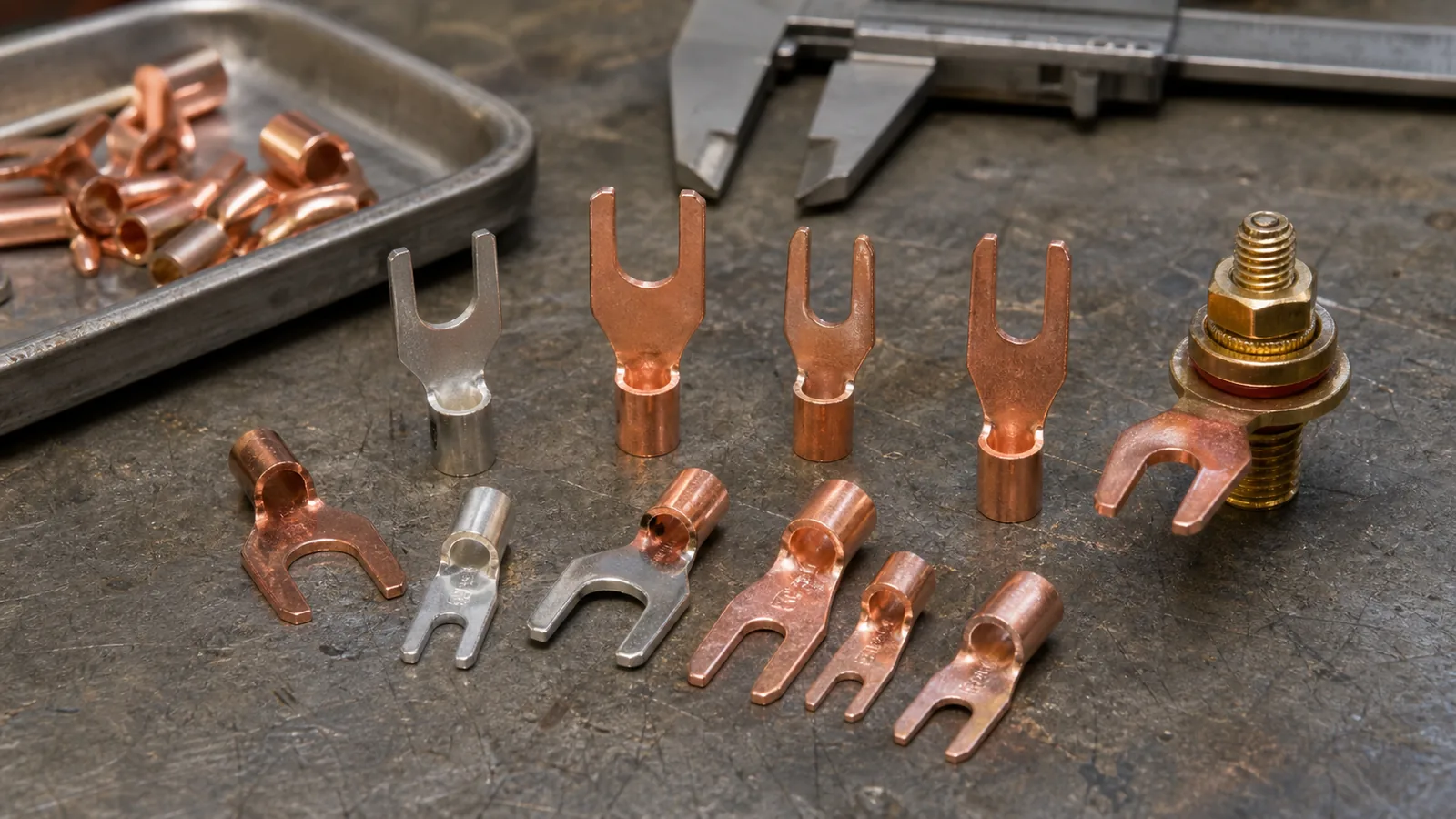
Shows spade connector range, fork widths, thicknesses, and detail photos.
Shows fork width, slot clearance, threaded post fit, and installed spade details.
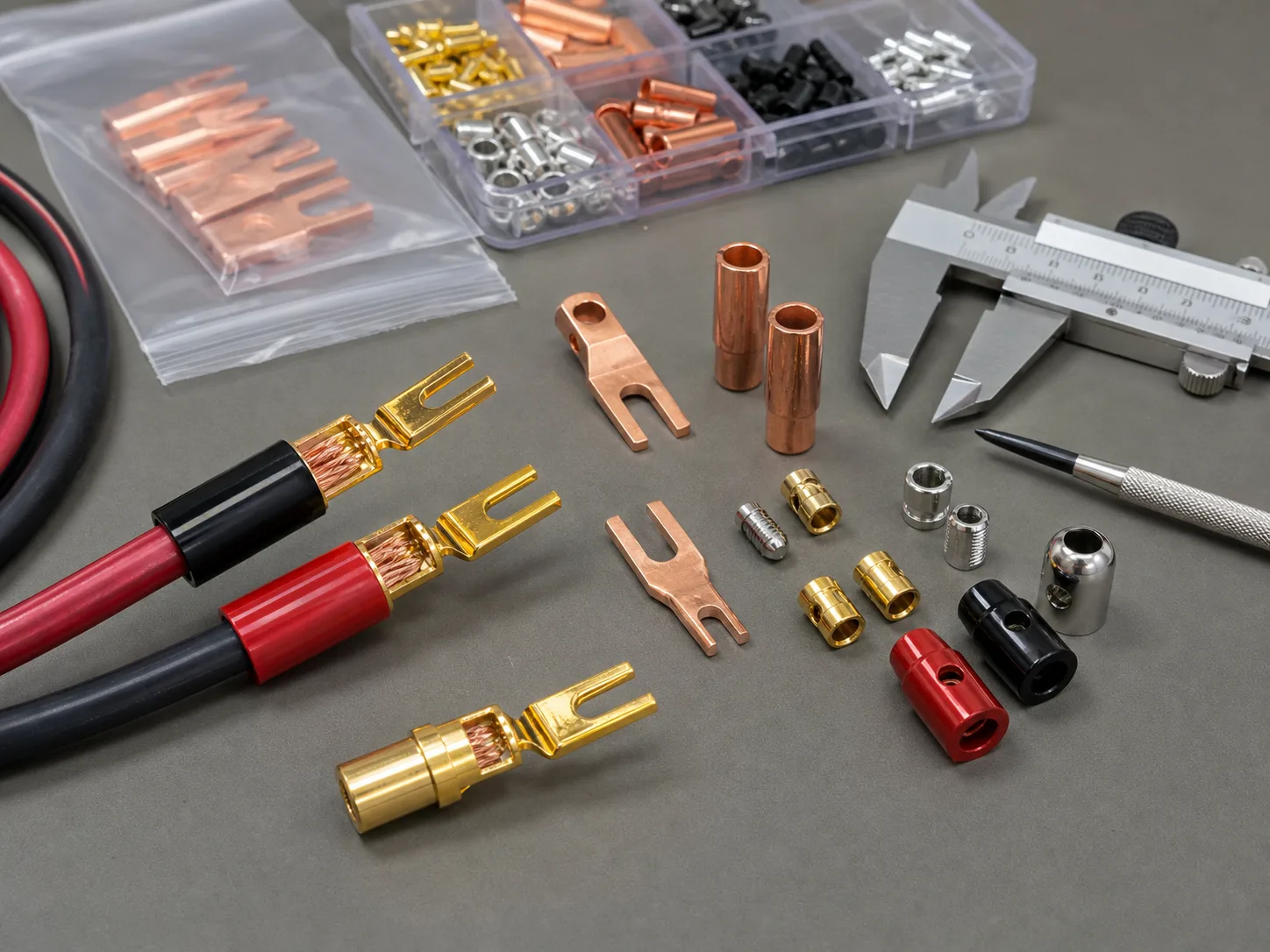
Shows conductor fit, cable barrel, crimp or solder route, fork body, and packing review.
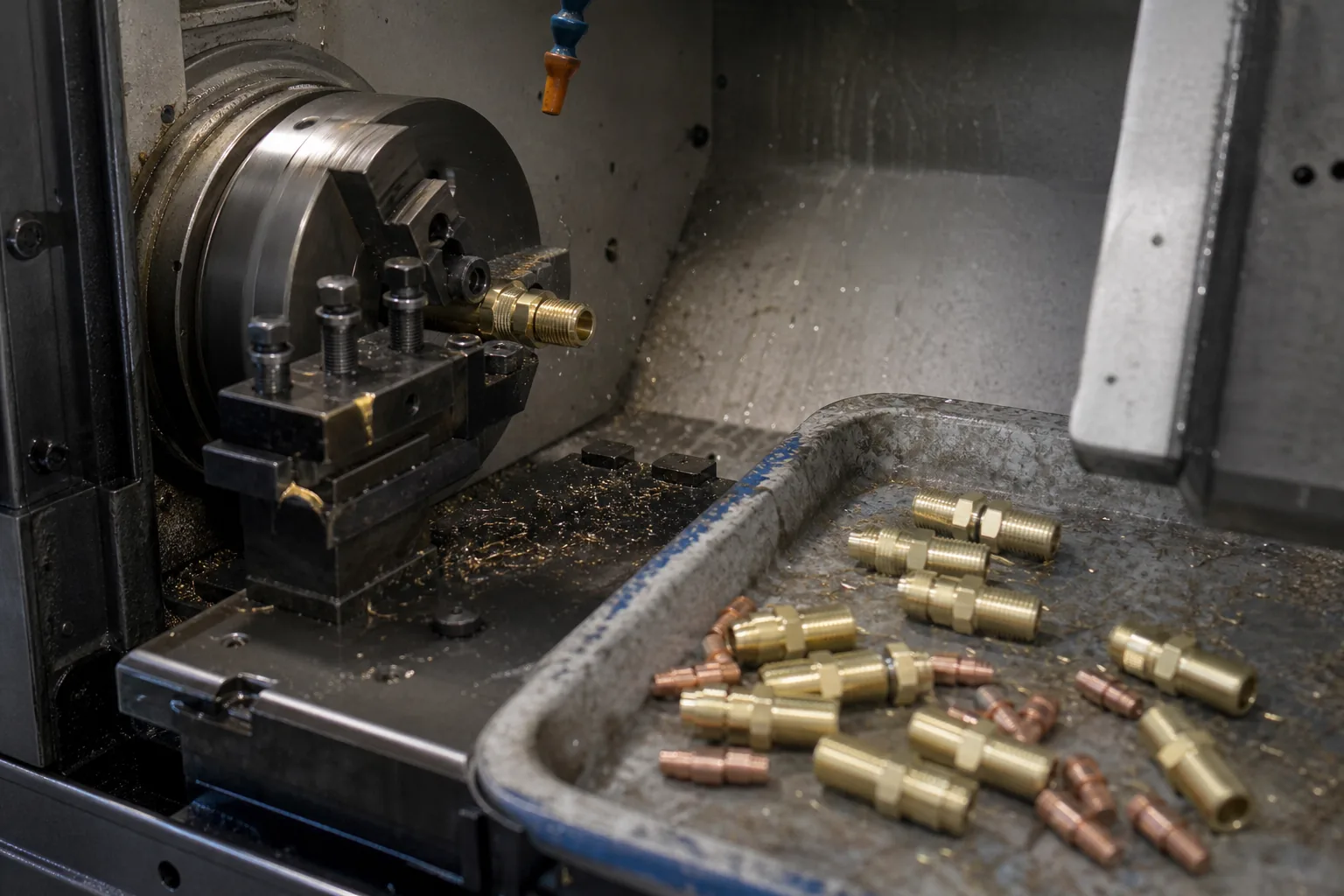
Shows fork width, burr, finish, and contact-zone checks.
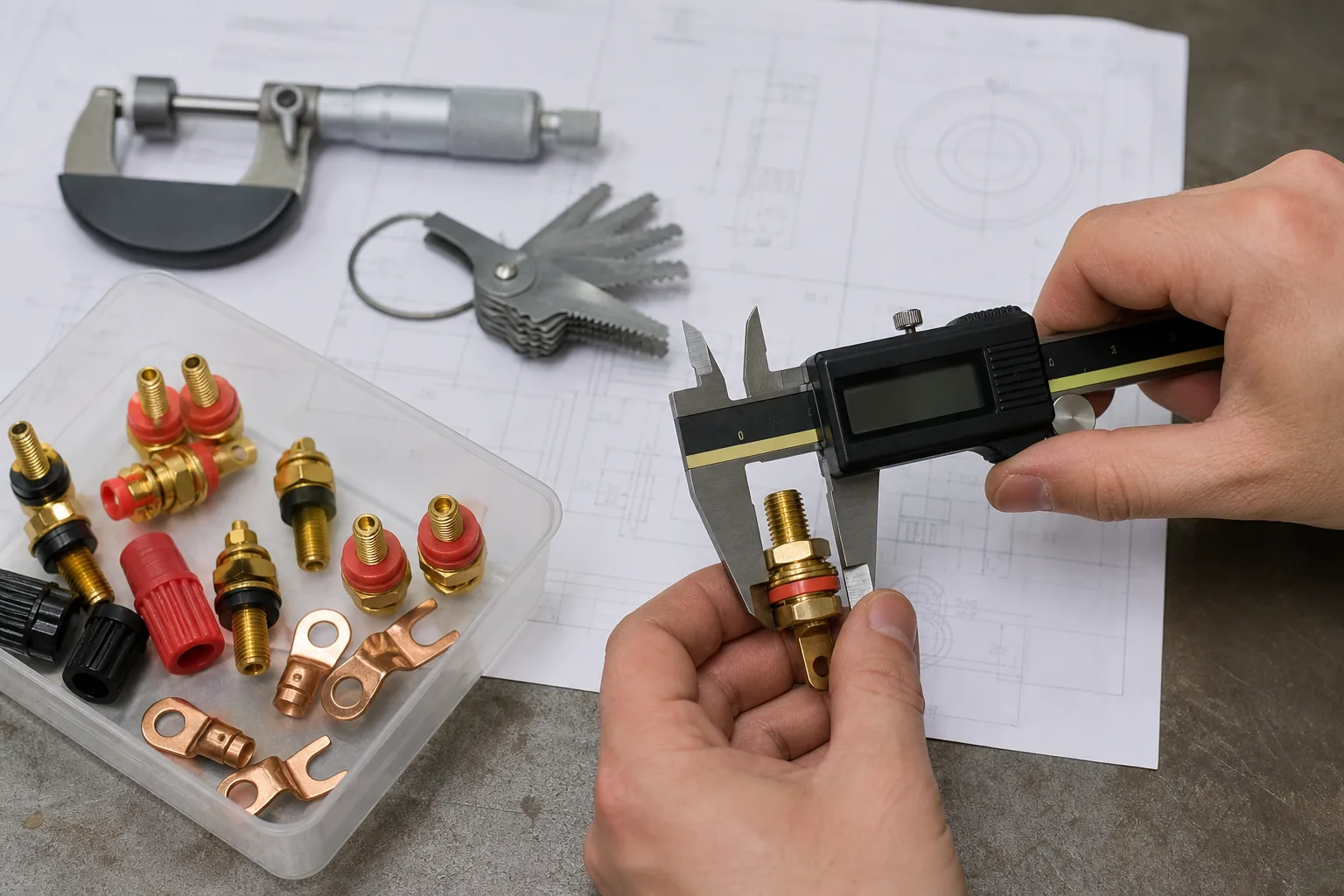
Shows cable size, finish, packaging, and sample approval records.
Quick Specs
Use this checklist to decide whether the project is an audio spade, a power fork terminal, or a drawing-based cable-side component.
Typical use
Speaker cable assemblies, amplifier outputs, binding post interfaces, industrial power links, and private-label terminal hardware
Mating basis
Fork width, post diameter, slot depth, installation clearance, and buyer-supplied mating hardware
Cable interface
Conductor size, crimp barrel, solder cup, set-screw, compression, or custom cable-side construction
Material route
Brass or copper-family route reviewed around conductivity, forming, machining, and finish requirement
Finish route
Gold, nickel, rhodium, tin, or custom finish reviewed by contact zone, appearance zone, and handling risk
RFQ basis
Mating post, conductor details, fork geometry, material, finish, packaging, and quantity range
Speaker cable spade terminals reviewed around binding post fit, fork width, cable interface, and finish requirement.
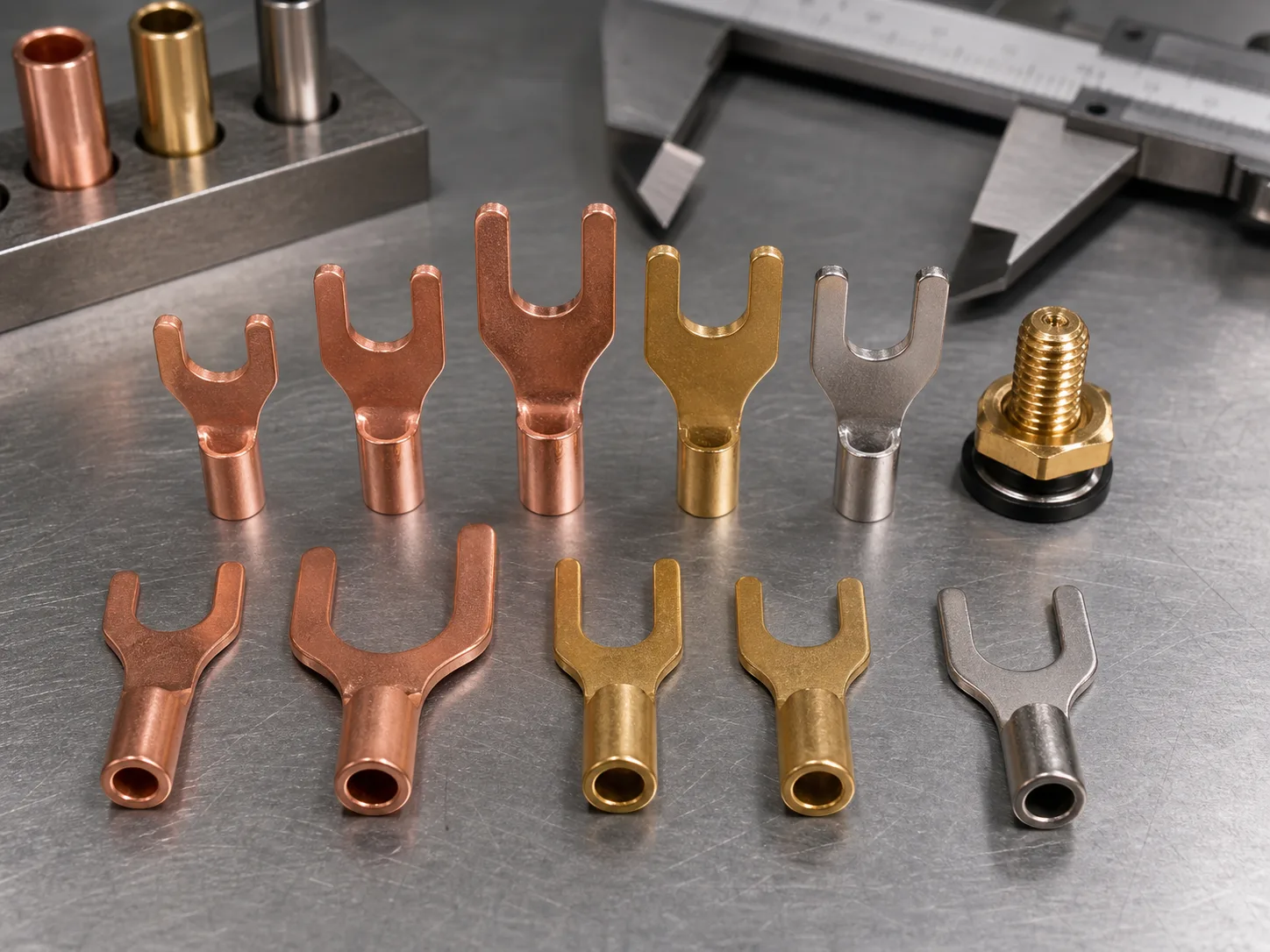
Y-shaped and fork terminal geometry reviewed against the mating post, installation clearance, and conductor size.
Cable-end terminal hardware developed around conductor fit, crimp or solder method, shell geometry, and packaging needs.
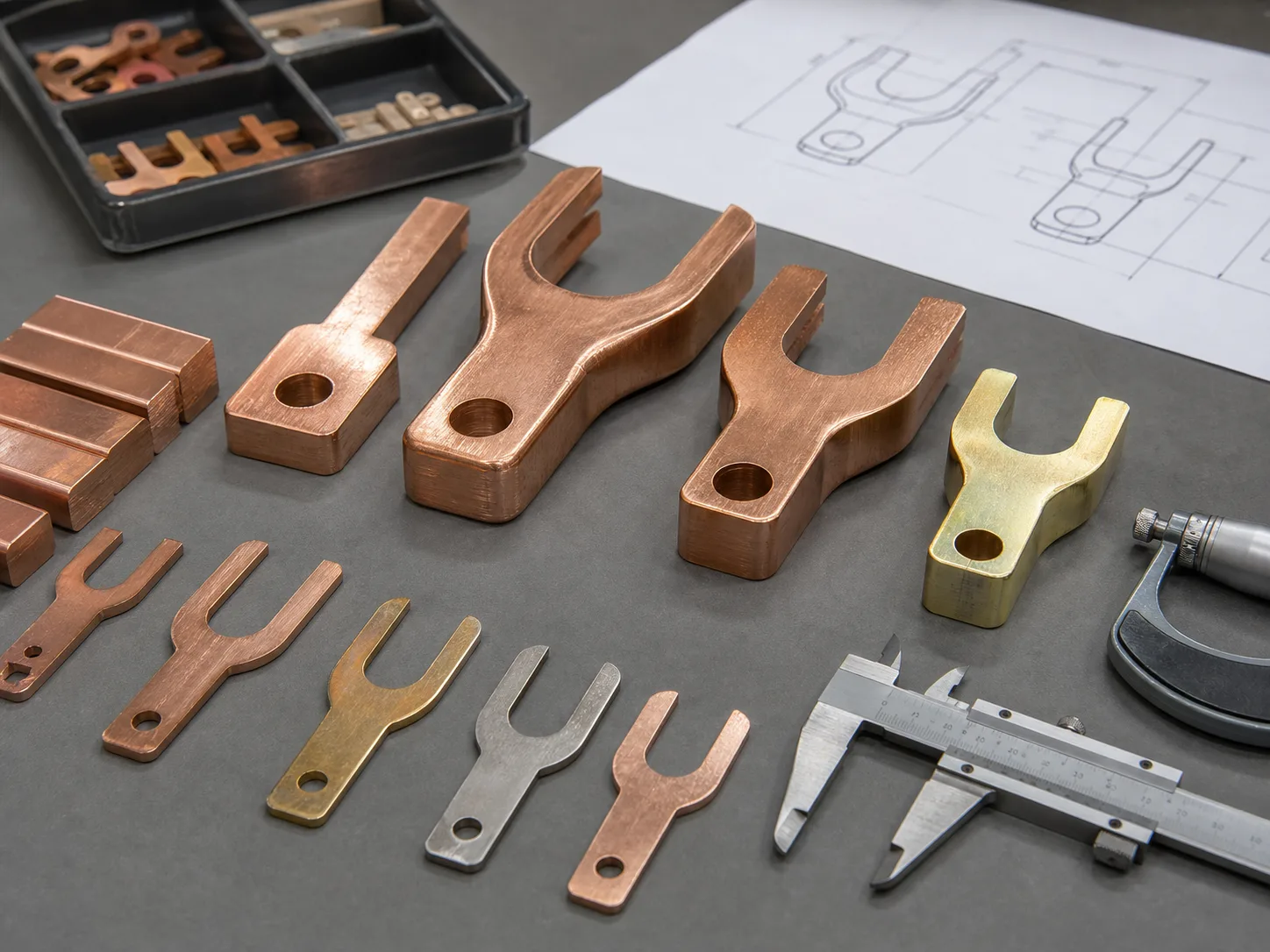
Drawing-based copper or brass spade components reviewed around material, finish, current path, and repeat production control.
Buyer Checklist
Spade projects usually fail when the fork geometry, cable interface, finish, and packaging are treated as separate decisions. Confirm them together before sample approval.
Engineering
Fork width, post fit, cable interface, conductor size, termination method, and installation clearance
Purchasing
Material and finish expectation, sample quantity, packaging, logo needs, MOQ, and repeat order assumptions
Quality
Approved fork geometry, plating zones, burr control, appearance criteria, and sample or drawing revision
Information Gain
Spade connector sourcing works best when fork fit, cable interface, finish, and packaging are reviewed together.
Best for audio cable assemblies where fork fit, finish appearance, conductor interface, and paired packaging matter.
Confirm binding post fit, fork width, cable size, and visible finish zones before sample release.
Best for higher-current or industrial interfaces where contact area, fastening, thickness, and burr control matter more than appearance.
Confirm current path, mating hardware, torque assumption, and protected contact surfaces early.
Best when a standard spade is close but the slot, barrel, shoulder, logo, or packaging needs a controlled OEM design.
Use the approved drawing and sample to control fork geometry, material, finish, and repeat orders.
Machined and reviewed for fit with the defined binding post, stud, or terminal interface
Base material is confirmed from the drawing, BOM, and application requirements
Fork geometry is reviewed against the mating post and installation method
Current, temperature rise, and validation needs are defined per application
Fork width, thickness, hole or slot geometry, and conductor fit confirmed from the drawing
Custom geometry, finish, cable interface, packaging, and repeat-order scope reviewed by RFQ
Bookshelf, floor-standing, and custom speaker connections
Power amplifier and integrated amplifier outputs
Speaker or amplifier interfaces that require matched fork geometry and secure installation
Speaker cable terminal hardware reviewed for conductor fit, finish, and packaging
High-current industrial and laboratory applications
Drawing or sample-based review for supplier replacement and controlled repeat orders
Spade Connector FAQ
These questions help avoid sample failures caused by mating fit, cable termination, and finish assumptions.
Yes. Send the mating post diameter, slot requirement, clearance limit, and drawing or sample so the fit can be reviewed.
Yes. Conductor fit, crimp or solder method, finish, logo, packaging, and paired-set requirements can be reviewed during RFQ.
Fit and burr control are common risks. Define fork geometry, contact zones, appearance zones, edge condition, and inspection method before approval.
Choose the copper route when contact performance, current path, or brand requirement matters more than machining cost or threaded hardware stability.
Spade Connector Evidence
Spade connector projects should be supported by evidence for fork geometry, mating post fit, conductor interface, finish zones, packaging, and repeat-order controls.
CNC turning, copper or brass machining, insulation parts, plating preparation, assembly, and packing photos or short videos.
Thread gauges, dimensional checks, appearance zones, fit checks, first-article notes, and project-specific QC sheets.
Material grade confirmation, plating requirement, visible and contact zones, sample approval reference, and finish acceptance criteria.
Approved sample records, revision history, packaging instruction, label scope, export packing, and repeat-order control notes.
Evidence Media
Buyers should see how product claims connect to the workshop, inspection table, RFQ file, and repeat-order controls.
Fork widths, slot depth, material options, thickness, and mating-post fit review.
Installed spade around a binding post stud, slot clearance, contact face, and access space.
Conductor fit, crimp or solder route, custom copper blanks, color shells, and packing review.
Thick copper spade bodies, finish samples, drawing review, dimensions, and current-path evidence.
Drawing and Specification Package
RFQ quality improves when engineering, purchasing, and quality teams agree on the same drawing, inspection, and approval basis before samples move into production.
Drawing, STEP/IGES model, sample photo, mating part, panel layout, or dimensioned sketch used as the review basis.
Metal grade, insulation material, plating route, visible zones, contact zones, color requirements, and compliance notes.
Critical dimensions, thread fit, contact surface, insulation fit, assembly sequence, appearance standard, and packaging check.
Sample approval, revision reference, change-control note, packaging instruction, and repeat-order acceptance criteria.
Upload drawings, fork geometry, cable interface, material, finish, and quantity requirements for review.
Send Your DrawingKnowledge Base
Use these resources to prepare cleaner RFQs, compare manufacturing routes, and reduce review back-and-forth before sampling.
Supplier review checklist for drawings, materials, plating, samples, inspection, capacity, and quotations.
Read resource ->Interface guide covering banana plugs, spade lugs, bare wire, pin connectors, and OEM review points.
Read resource ->Practical answers for engineering and purchasing teams before sending a drawing-based RFQ.
Read resource ->