Typical use
Speaker cabinets, amplifier rear panels, audio terminal plates, and test panels
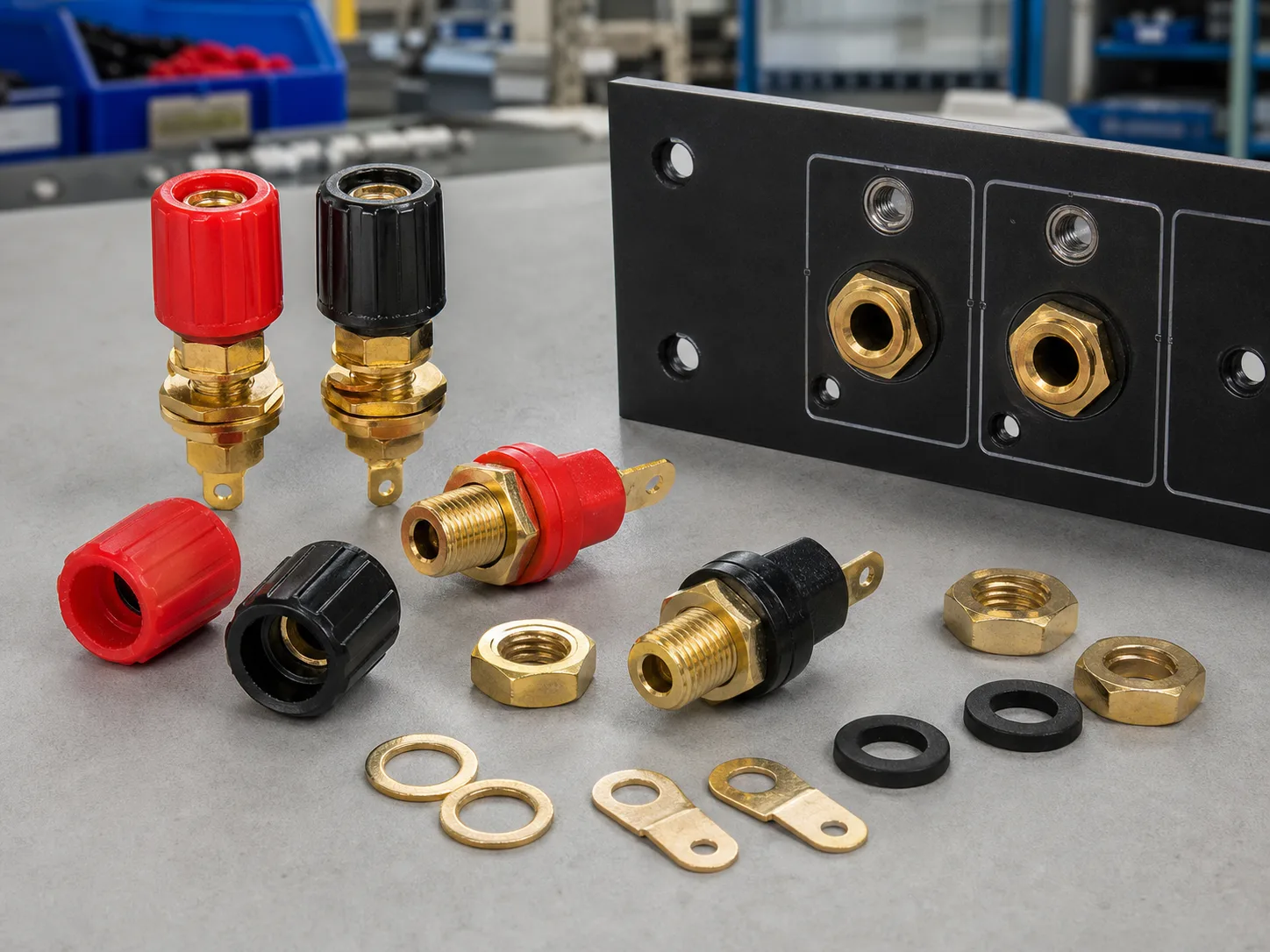
Binding Post Evidence Images
These evidence images show the product range, panel interface, machining route, insulation, inspection, and RFQ release context.
Shows red/black binding posts, hardware sets, and detail photos.
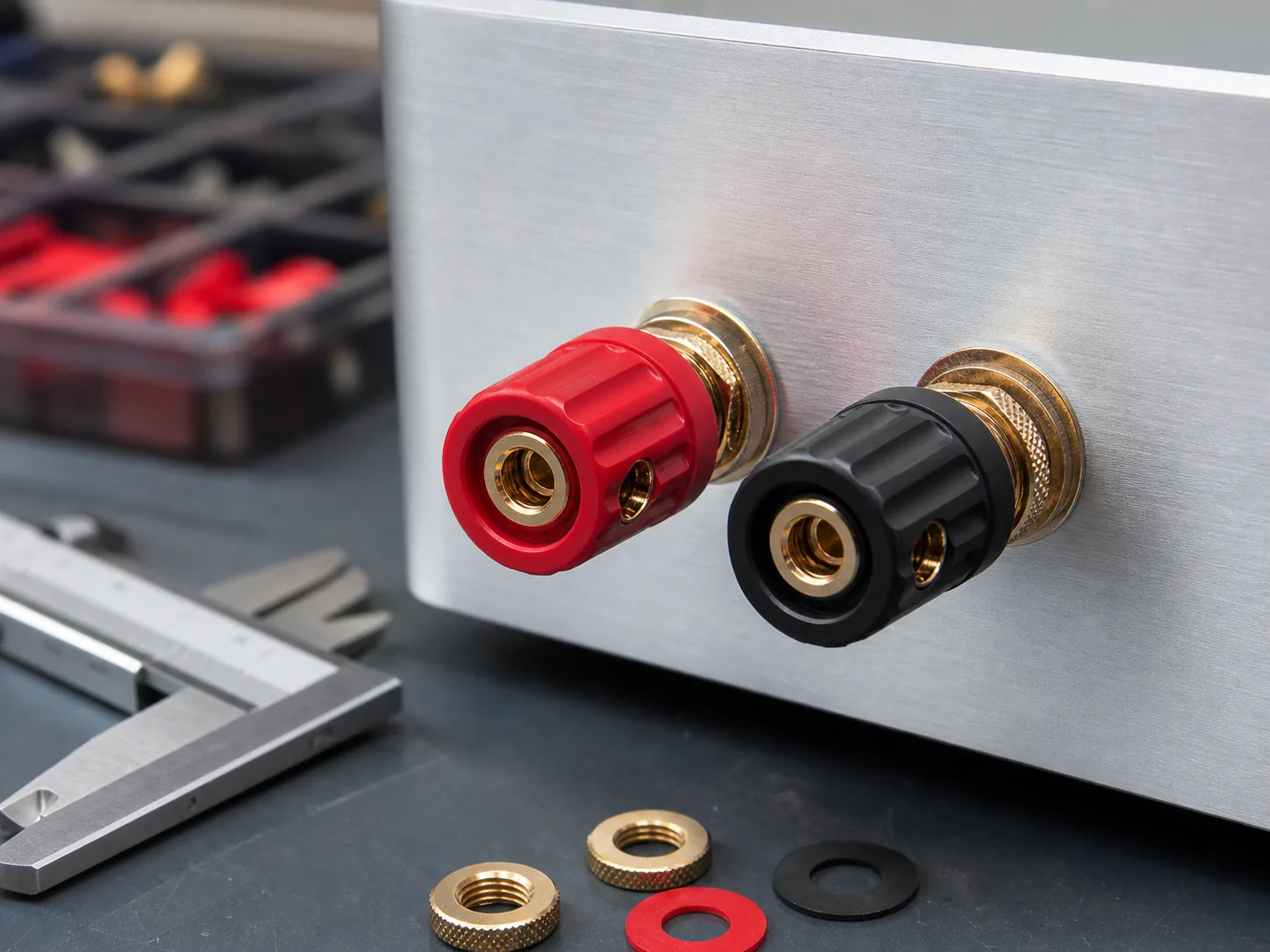
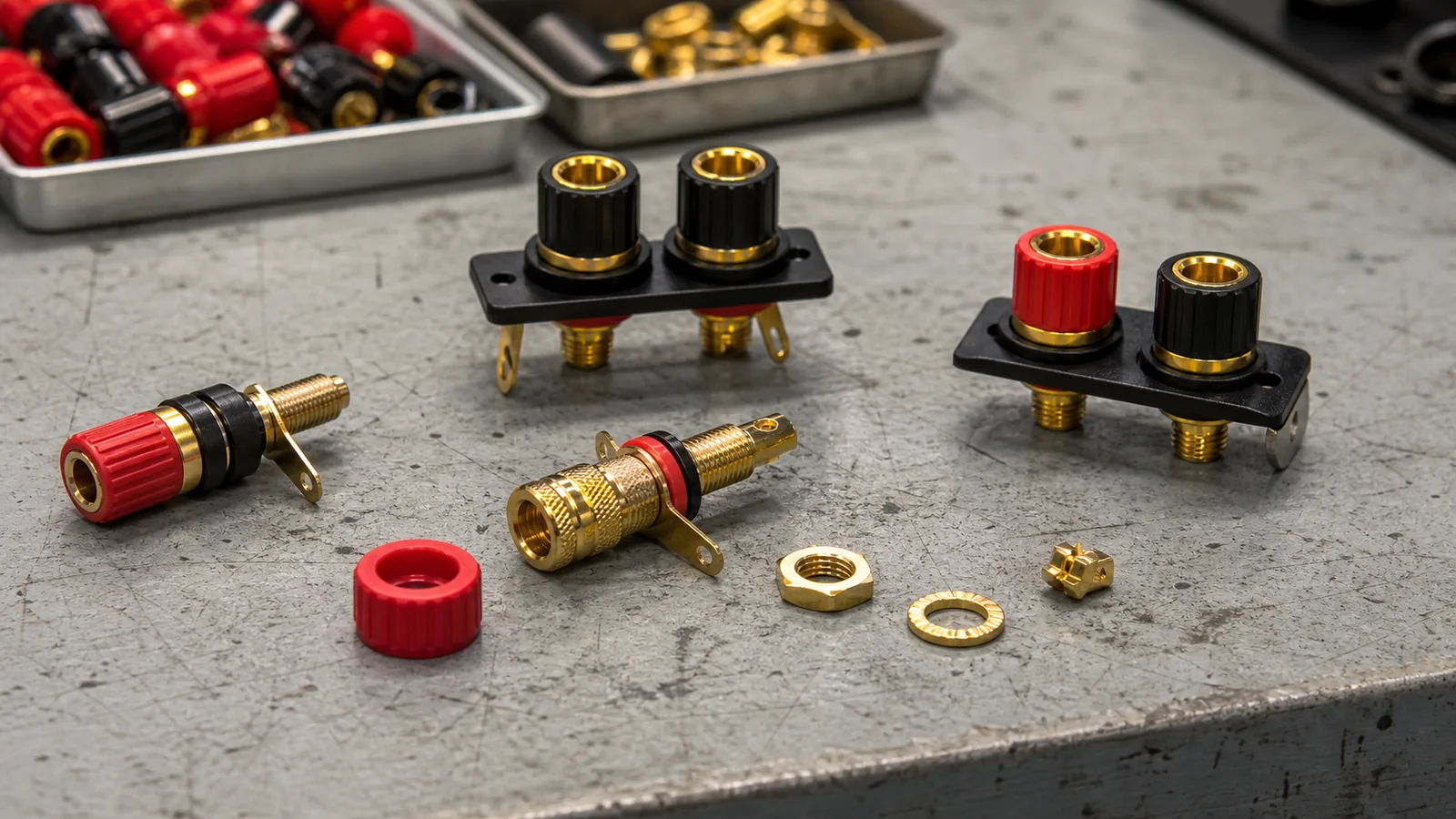
Shows panel mount, banana socket, bare-wire access, washers, nuts, and fit details.
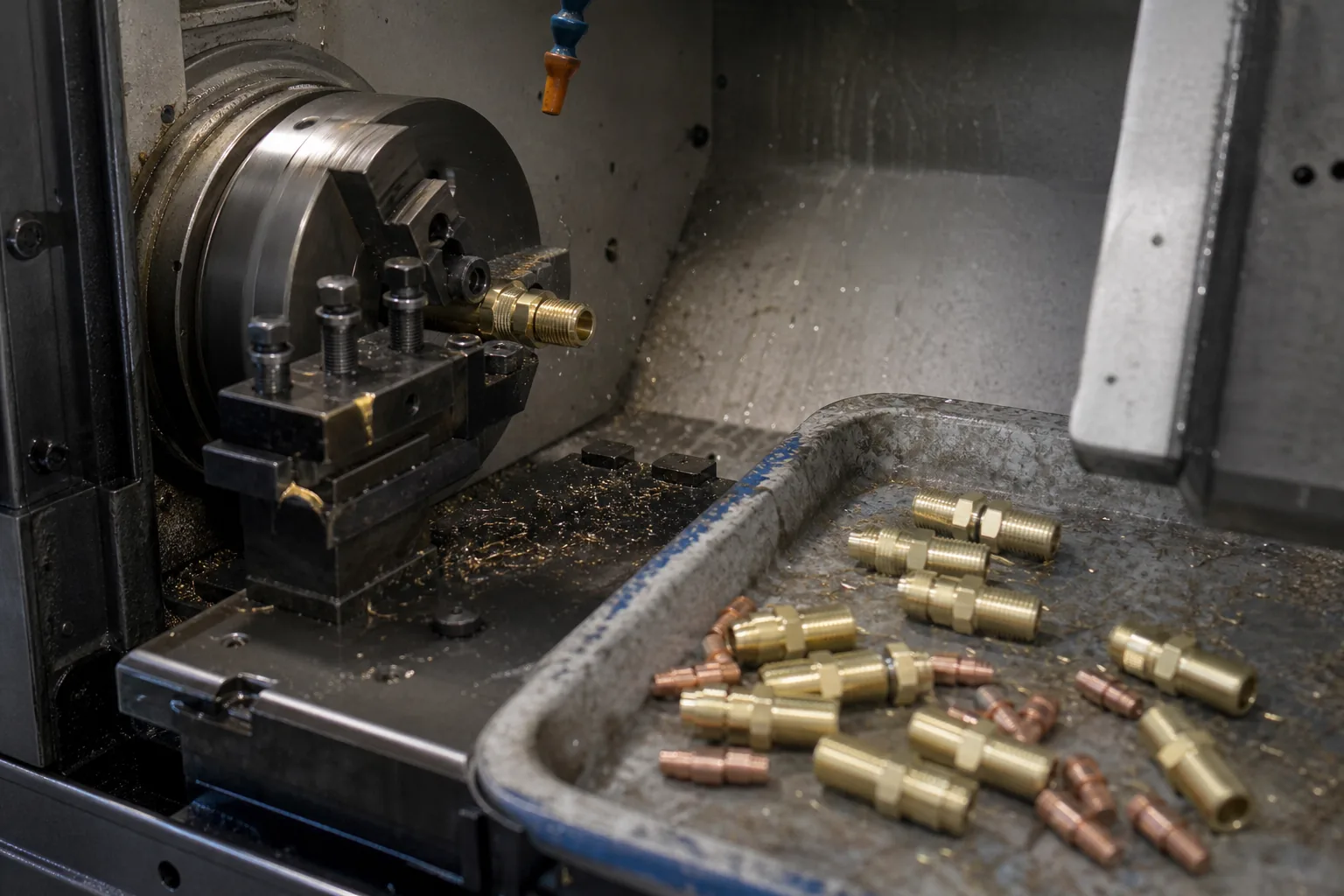
Shows machined posts, threads, nuts, collars, and inspection media.
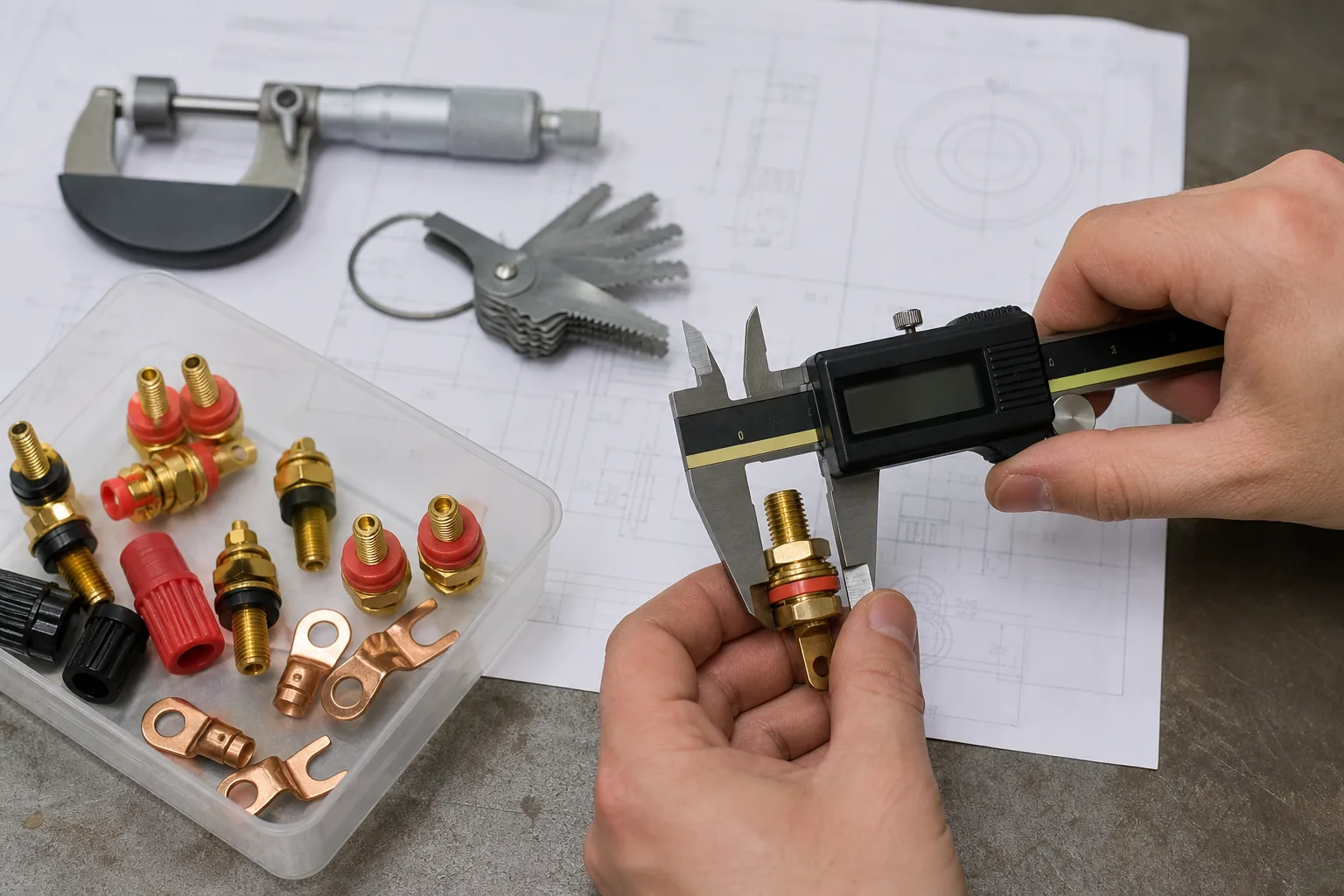
Shows thread checks, insulation fit checks, and sample approval records.
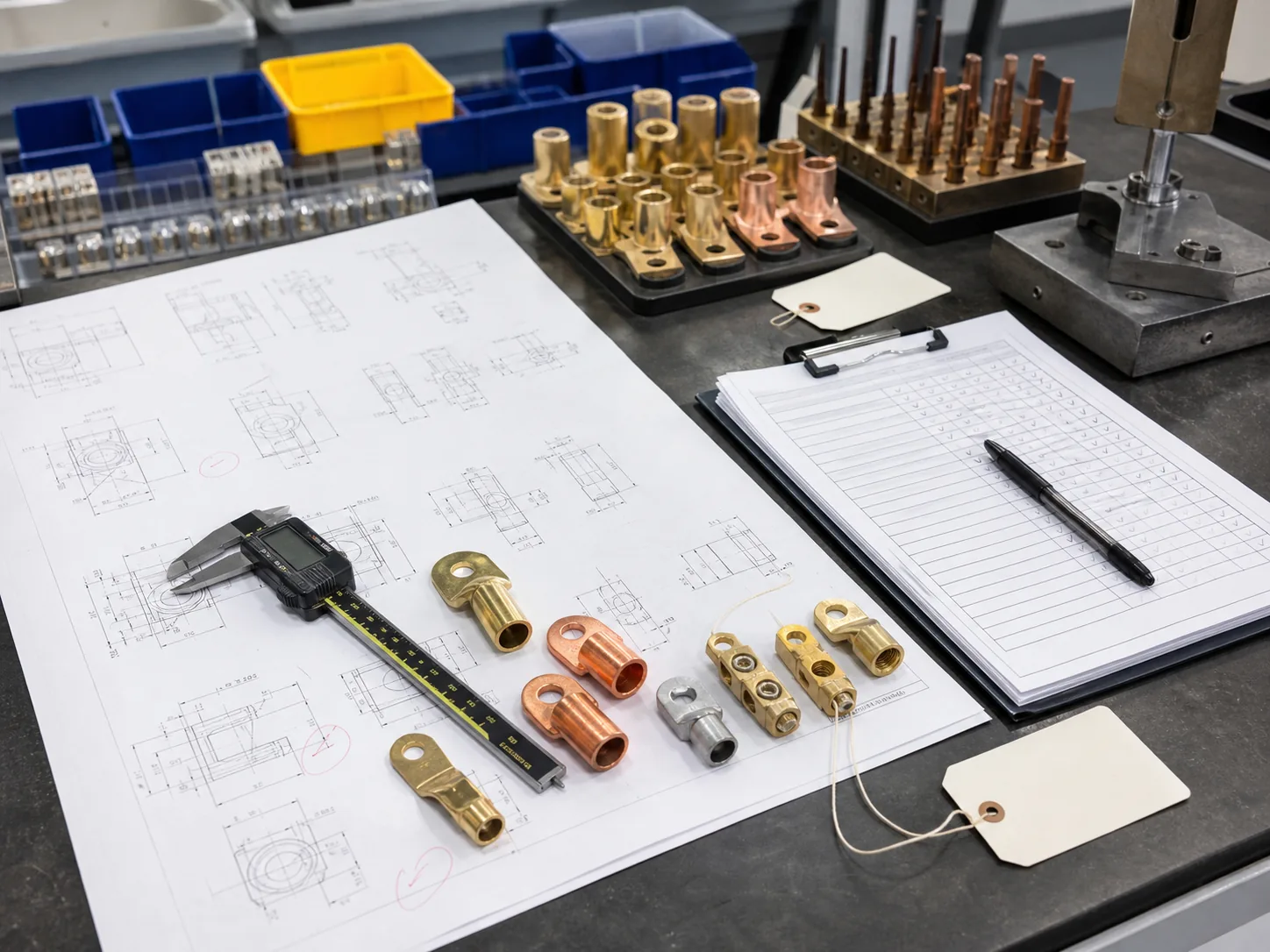
Shows drawings, samples, packing specs, finish zones, and release records.
Quick Specs
These are not fixed catalog promises. They are the practical inputs buyers should confirm before Axiterm reviews a binding post project.
Typical use
Speaker cabinets, amplifier rear panels, audio terminal plates, and test panels
Common interfaces
Banana plug, spade lug, bare wire, pin connector, or mixed 5-way use
Metal route
Brass or copper-family component route confirmed by drawing and application
Finish route
Gold, nickel, rhodium, tin, or custom finish reviewed by contact and appearance zones
Insulation
Red/black caps, shoulder washers, molded parts, and panel isolation reviewed per assembly
RFQ basis
Panel layout, mating cable method, drawing/sample, quantity, and finish requirement
Back-panel terminal posts reviewed around panel thickness, mounting hole, rear termination, and assembly access.
Binding post interfaces for banana plugs, spade lugs, bare wire, pin connectors, and equipment-specific cable access.
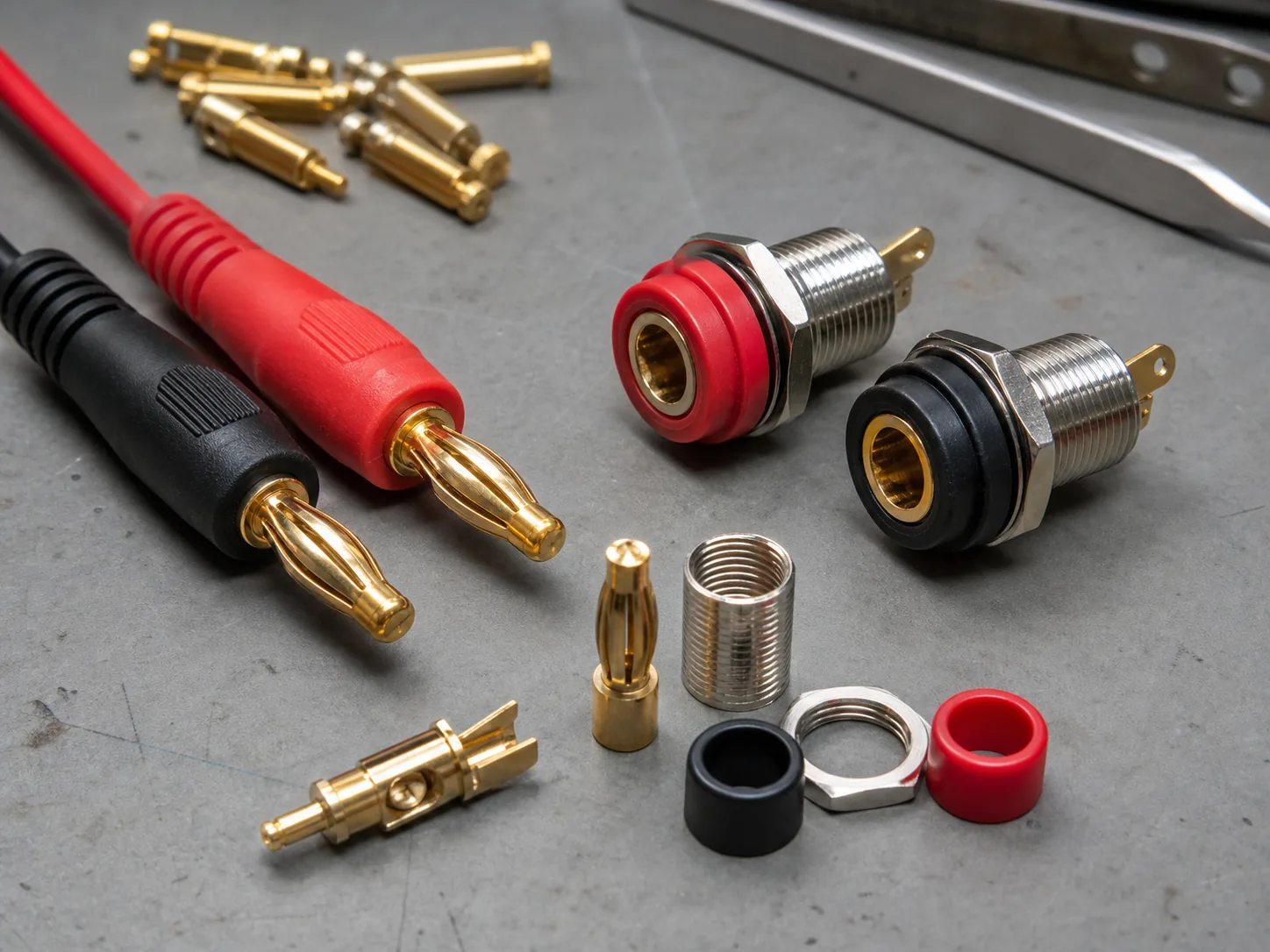
Panel terminals and jack-style interfaces developed around mating fit, contact geometry, and repeated plug insertion.
Red/black caps, shoulder washers, molded insulation, and custom geometry developed from the equipment interface.
Buyer Checklist
Binding posts are the entry product, but the real sourcing risk is the full interface: panel fit, cable compatibility, insulation, finish, assembly, and repeat-order control.
Engineering
Panel thickness, mounting hole, thread, banana socket, spade/bare-wire access, insulation shoulder, and rear termination
Purchasing
Sample need, order quantity, finish expectation, red/black set packaging, logo or private label scope, and repeat demand
Quality
Approved drawing or sample, contact zones, appearance zones, thread fit, assembly checks, and packaging protection
Information Gain
The best binding post route depends on thread fit, contact expectations, visible finish, insulation, and repeat-order controls.
Good for threaded hardware, stable machining, finish-ready bodies, and cost-sensitive terminal assemblies.
Risk to define
Define plating preparation, appearance zones, thread fit, and contact expectations before samples.
Useful when conductivity, contact surface, current path, or audio brand positioning requires copper-family parts.
Risk to define
Define burr control, oxidation protection, plating choice, and contact-zone inspection before approval.
Useful when panel isolation, color coding, shoulder geometry, or assembly sequence controls the final fit.
Risk to define
Define material, red/black color standard, fit with metal parts, and sample approval method early.
Critical dimensions and inspection points are defined from the approved drawing
Material grade is selected and documented against the application requirement
Banana plug, spade lug, bare-wire, rear termination, and panel access are checked against the final equipment layout
Finish, contact zones, and appearance requirements are confirmed before production
Logo, color, paired sets, labels, and packaging requirements are confirmed as part of the RFQ scope
MOQ and production route are confirmed after drawing and quantity review
Binding post interfaces for integrated amplifiers, power amps, and equipment brands
Terminal sets for bookshelf, floor-standing, and custom speaker programs
AV receivers and surround systems with defined panel, color, and finish requirements
Studio monitors and professional equipment requiring reliable connections
Power supplies and test equipment with high-current requirements
Drawing-based terminal projects with defined material, finish, insulation, and packaging needs
RFQ Specification Checklist
These practical inputs help engineering and purchasing teams turn a product idea, sample, or drawing into a useful quotation and repeatable production reference.
Drawing basis
2D drawing, 3D model, sample, or dimensioned sketch
Interface
Panel thickness, thread, mating plug, cable, or mounting method
Critical points
Dimensions, contact zones, insulation fit, assembly access, and revision reference
Metal parts
Brass, copper, steel, or material per drawing
Insulation
Nylon, plastic, color-coded parts, or custom molded geometry
Surface finish
Gold, nickel, tin, rhodium, or custom finish reviewed per requirement
Contact zones
Visible, functional, masked, or protected areas identified before approval
Samples
Prototype or first-article approval path after technical review
Inspection
Project-specific dimensional, appearance, fit, and functional checks
Packaging
Bulk, separated parts, assembled sets, labels, or private label scope
Repeat orders
Approved drawing, sample, or acceptance criteria used as the production reference
Quantity range
Prototype, trial batch, annual demand, or repeat program expectation
Lead time
Sample timing and production timing confirmed after process review
Risk notes
NDA, replacement supplier, validation schedule, or compliance needs
Binding Post Evidence
Binding post sourcing should be supported by evidence for panel fit, thread control, contact zones, insulation fit, finish approval, packaging, and repeat-order records.
CNC turning, copper or brass machining, insulation parts, plating preparation, assembly, and packing photos or short videos.
Thread gauges, dimensional checks, appearance zones, fit checks, first-article notes, and project-specific QC sheets.
Material grade confirmation, plating requirement, visible and contact zones, sample approval reference, and finish acceptance criteria.
Approved sample records, revision history, packaging instruction, label scope, export packing, and repeat-order control notes.
Evidence Media
Buyers should see how product claims connect to the workshop, inspection table, RFQ file, and repeat-order controls.
Red and black posts, panel holes, washers, nuts, insulation shoulder, and assembly clearance.
Machined posts, thread areas, hardware fit, gauge checks, and process control records.
Contact zones, appearance zones, fit checks, marked dimensions, and sample approval notes.
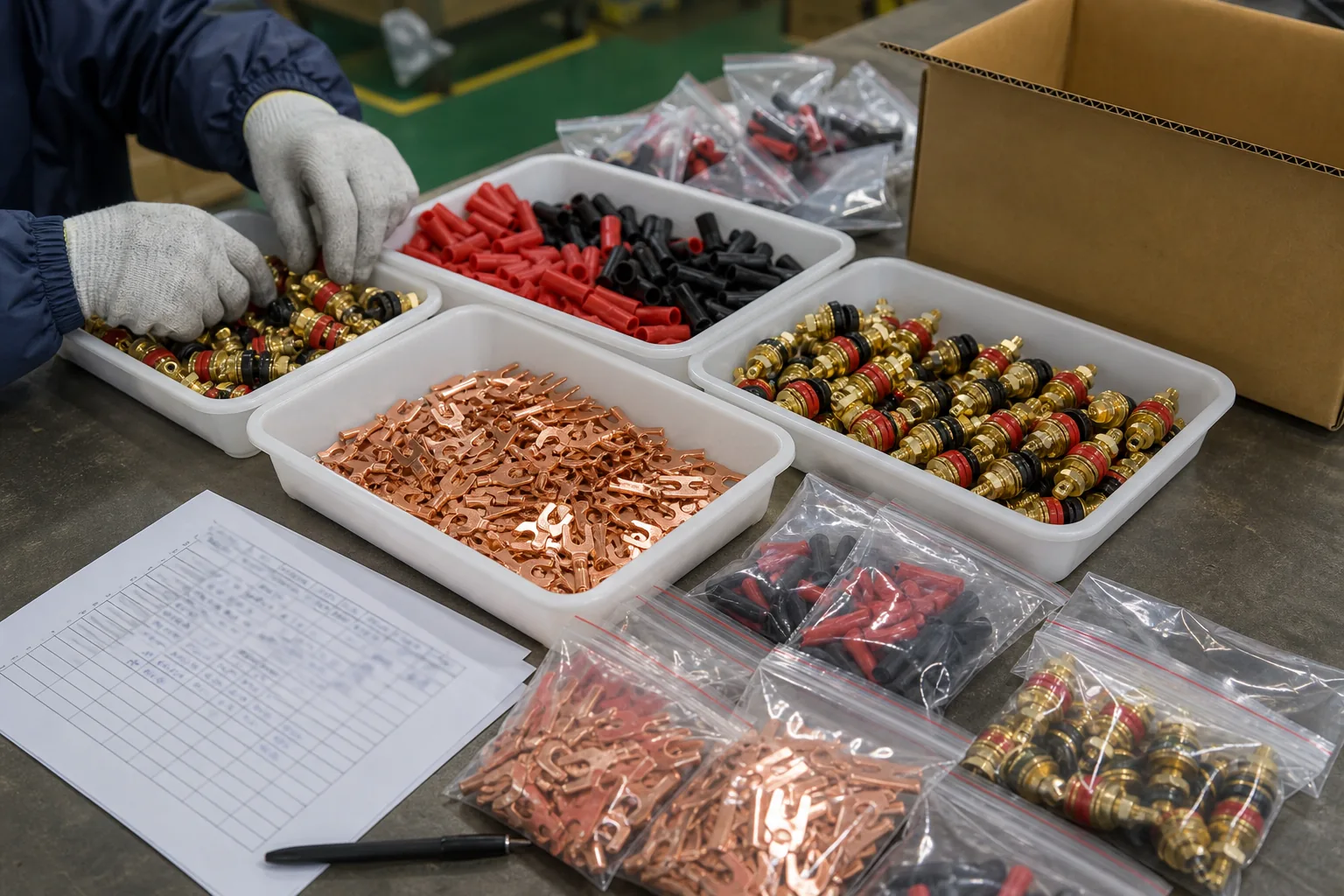
Red and black set handling, packing instructions, labels, release records, and repeat-order controls.
Drawing and Specification Package
RFQ quality improves when engineering, purchasing, and quality teams agree on the same drawing, inspection, and approval basis before samples move into production.
Drawing, STEP/IGES model, sample photo, mating part, panel layout, or dimensioned sketch used as the review basis.
Metal grade, insulation material, plating route, visible zones, contact zones, color requirements, and compliance notes.
Critical dimensions, thread fit, contact surface, insulation fit, assembly sequence, appearance standard, and packaging check.
Sample approval, revision reference, change-control note, packaging instruction, and repeat-order acceptance criteria.
Binding Post FAQ
Use these answers to decide whether the project should start from a standard-style binding post or a custom terminal component review.
Yes. Thread, shoulder, nut hardware, rear termination, and panel fit should be reviewed from a drawing, sample, or panel layout.
Yes. Include the mating cable method or sample so the banana socket, spade access, bare-wire path, and clearance can be checked together.
Yes. Logo, red/black color matching, paired-set packaging, labels, and private-label requirements should be included in the RFQ.
Repeat production should be controlled by the approved drawing, sample, inspection points, finish zones, and packaging requirements.
Upload the panel interface, cable connection method, material and finish expectation, quantity range, and sample requirement.
Send Your DrawingKnowledge Base
Use these resources to prepare cleaner RFQs, compare manufacturing routes, and reduce review back-and-forth before sampling.
Supplier review checklist for drawings, materials, plating, samples, inspection, capacity, and quotations.
Read resource ->Interface guide covering banana plugs, spade lugs, bare wire, pin connectors, and OEM review points.
Read resource ->Practical answers for engineering and purchasing teams before sending a drawing-based RFQ.
Read resource ->