Engineering before price
A quote is most useful after interface, material, finish, assembly, inspection, and quantity assumptions are understood.
Supplier Evidence Images
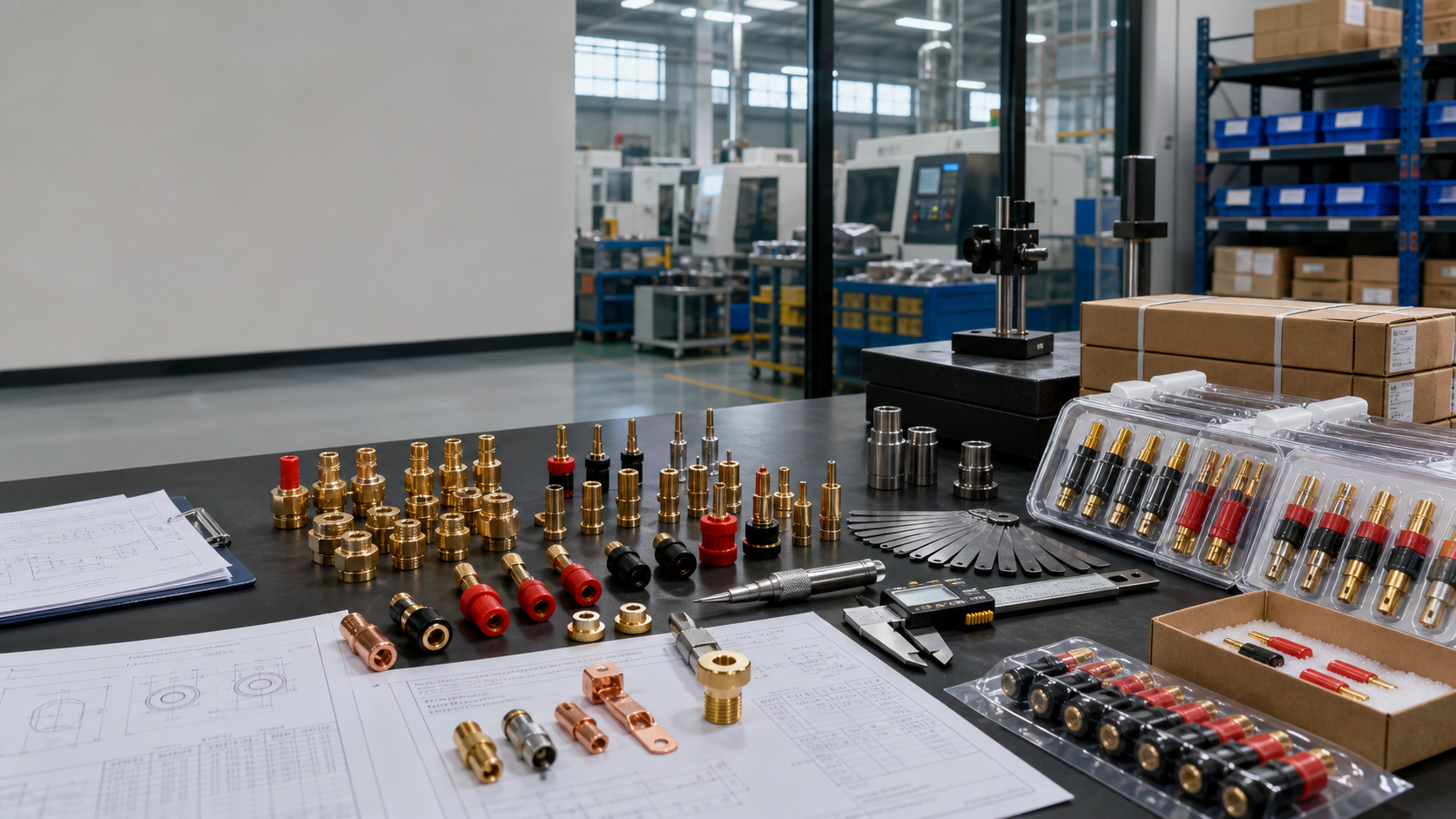
These evidence images keep the page focused on what buyers expect before trusting a supplier: factory context, engineering review, process capability, inspection, and export readiness.
Shows product range, drawing review, inspection tools, and packaging evidence in one supplier context.
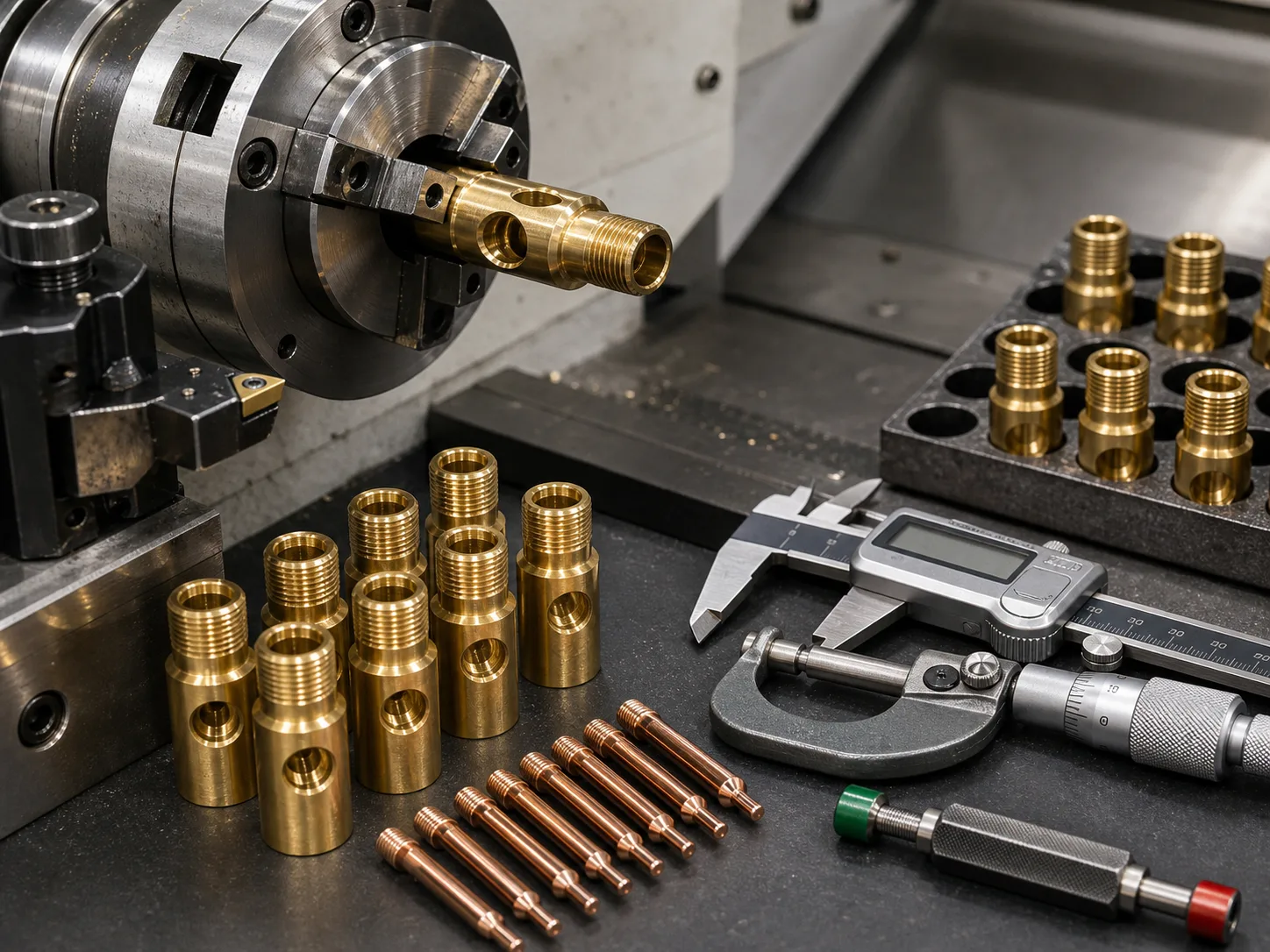
Connects supplier claims to machining, in-process checks, and controlled component production.
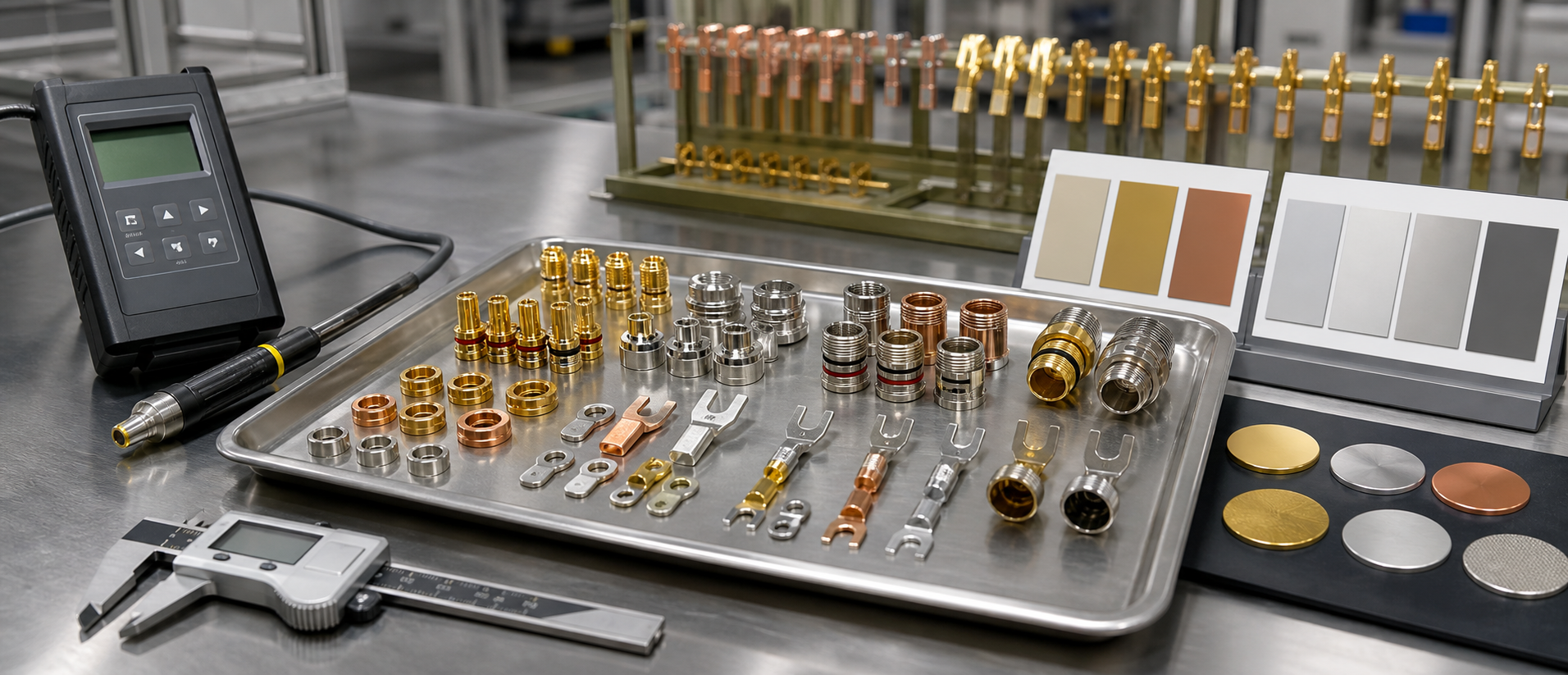
Supports buyer checks around plating, appearance zones, contact surfaces, and acceptance criteria.
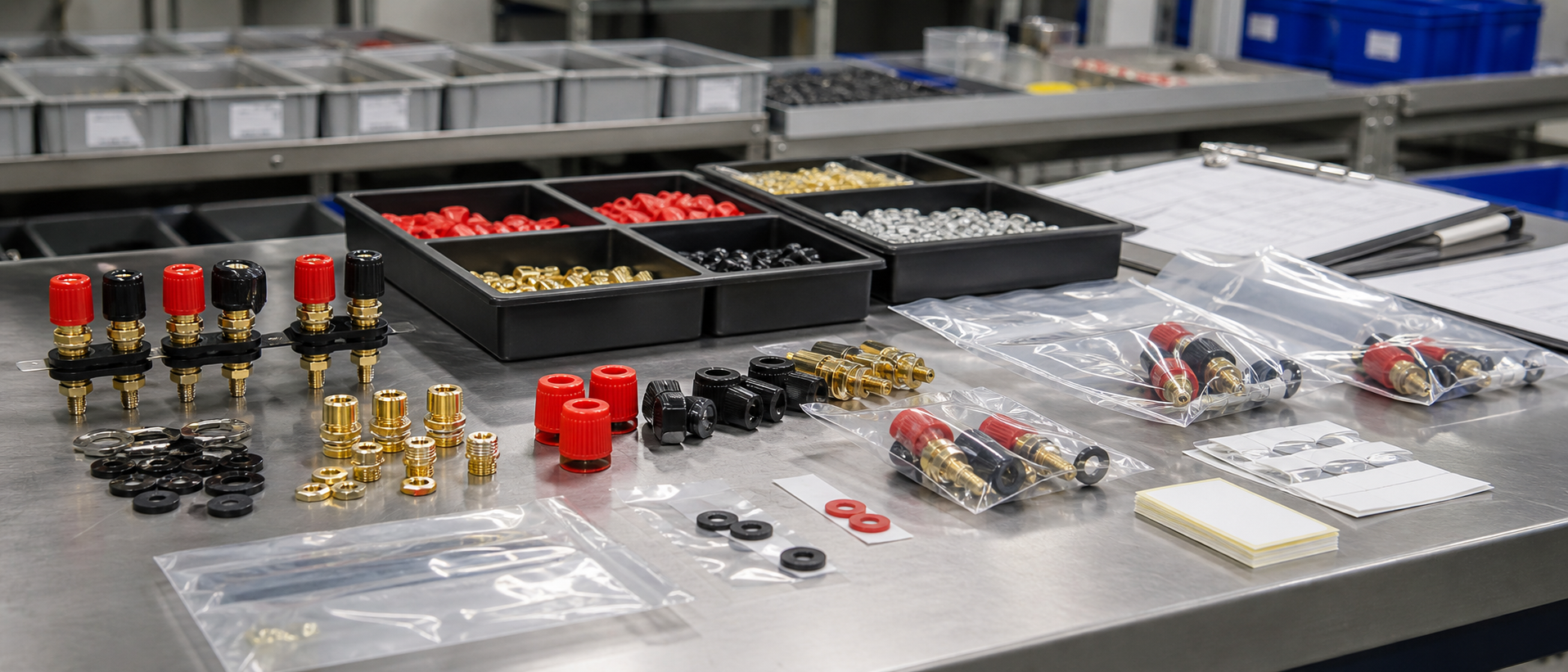
Shows assembled sets, color coding, kit control, packing, and repeat-order readiness.
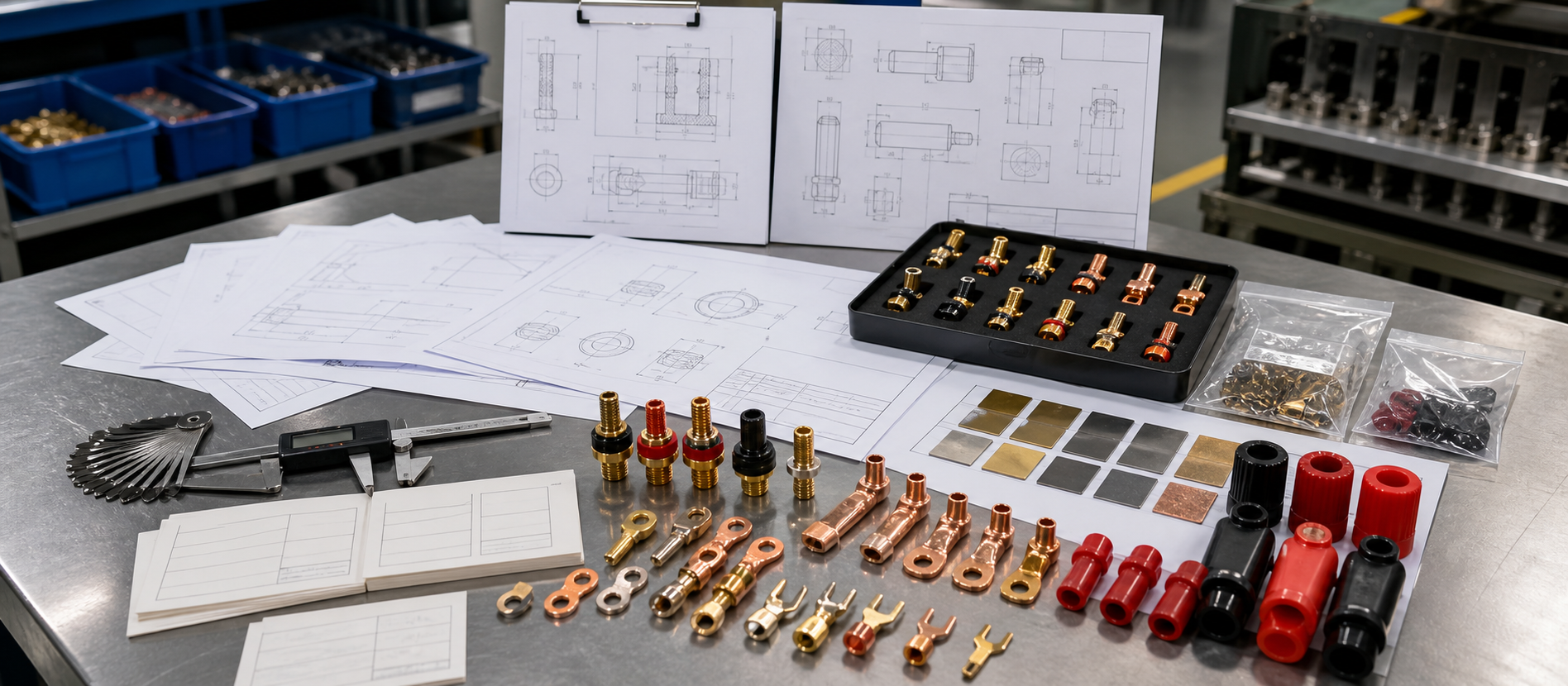
Links company credibility to drawings, samples, quantity range, approval path, and quotation basis.
Axiterm is positioned for engineering RFQs, not one-off catalog shopping. A useful project review starts with the interface, material, finish, quantity, assembly scope, and approval reference.
A quote is most useful after interface, material, finish, assembly, inspection, and quantity assumptions are understood.
Manufacturing capability should be shown through drawings, samples, process controls, approval references, and packaging requirements.
Recurring production should be tied to an approved drawing, sample, or acceptance criteria, not only a product photo.
Machining review for brass components, copper components, threaded terminal parts, and connector hardware.
Nylon insulation components, plastic housing, and custom molded terminal parts.
Terminal assembly with red/black color coding, hardware kits, fit checks, and packaging review.
OEM development from drawing or sample review through sample approval and controlled production.
Binding posts and terminal components developed for amplifiers, speakers, and other audio equipment.
High current terminals for power supplies, battery testing, and laboratory equipment.
Custom manufacturing with logo printing, private labeling, and flexible production.
Packaging, documentation, delivery terms, and destination requirements are confirmed for each order.
Buyer Confidence
These details help engineering, purchasing, quality, and management teams decide whether Axiterm is a realistic manufacturing partner for a repeatable project.
Initial RFQ Review
For complete drawings, quantity range, material, finish, and application details. Missing inputs are clarified before pricing is treated as final.
MOQ
Confirmed after part geometry, process route, sample needs, and recurring order expectations are reviewed.
Samples
Prototype, reference sample, or first-article approval path can be discussed before recurring production and repeat order control.
Order Control
Repeat production should be tied to an approved drawing, sample, inspection points, packaging notes, or agreed acceptance criteria.
Engineering
Fit, thread, material, finish, insulation, and validation inputs
Purchasing
MOQ, lead time, packaging, sample cost, and repeat order assumptions
Quality
Inspection points, traceability needs, approval reference, and defect handling
Management
Manufacturing scope, export communication, and long-term supplier fit
Certificates and compliance documents are confirmed per material, finish, and project requirement.
Supplier Validation
This page should help sourcing leads decide whether Axiterm is worth a technical RFQ. Use the four validation paths below before comparing price alone.
Drawings, mating parts, material route, finish zones, insulation, and critical-to-fit dimensions are reviewed before quoting.
CNC machining, brass or copper route, molded insulation, plating, assembly, and packaging are connected to the project requirement.
Inspection points, approved samples, appearance zones, thread checks, and repeat-order references should be agreed before production.
MOQ, sample path, lead time, packaging, private label, and repeat demand are confirmed after drawing and application review.
Evidence Needed
A useful supplier discussion connects buyer-side drawings with factory, inspection, packaging, sample, and approval evidence so the review becomes specific.
Drawing or sample
Shows the real interface, geometry, mating parts, and revision basis.
Material and finish route
Clarifies brass, copper, plating, insulation, and substitution limits.
Inspection expectations
Defines thread fit, contact zones, dimensions, appearance, and sample approval.
Packaging and repeat order needs
Helps control paired sets, labels, private label, and shipment protection.
Trust Evidence
Certificates can help, but B2B buyers usually need a wider evidence chain before they trust a new manufacturing partner.
01
Manufacturing scope, export communication, and supplier replacement fit
02
CNC turning, brass/copper machining, molded insulation, plating, and assembly route
03
Critical dimensions, thread fit, appearance, contact zones, functional checks, and packaging review
04
Project examples, capability cases, approved sample stories, or supplier replacement scenarios
05
OEM, private label, distributor, or application evidence when disclosure is allowed
06
Drawing review, open questions, DFM notes, sample approval, and repeat-order control
Supplier Evidence
An about page should not only describe the company. It should point buyers toward factory, inspection, project, and export evidence that lowers supplier risk.
CNC turning, copper or brass machining, insulation parts, plating preparation, assembly, and packing photos or short videos.
Thread gauges, dimensional checks, appearance zones, fit checks, first-article notes, and project-specific QC sheets.
Material grade confirmation, plating requirement, visible and contact zones, sample approval reference, and finish acceptance criteria.
Approved sample records, revision history, packaging instruction, label scope, export packing, and repeat-order control notes.
Evidence Media
Buyers should see how product claims connect to the workshop, inspection table, RFQ file, and repeat-order controls.
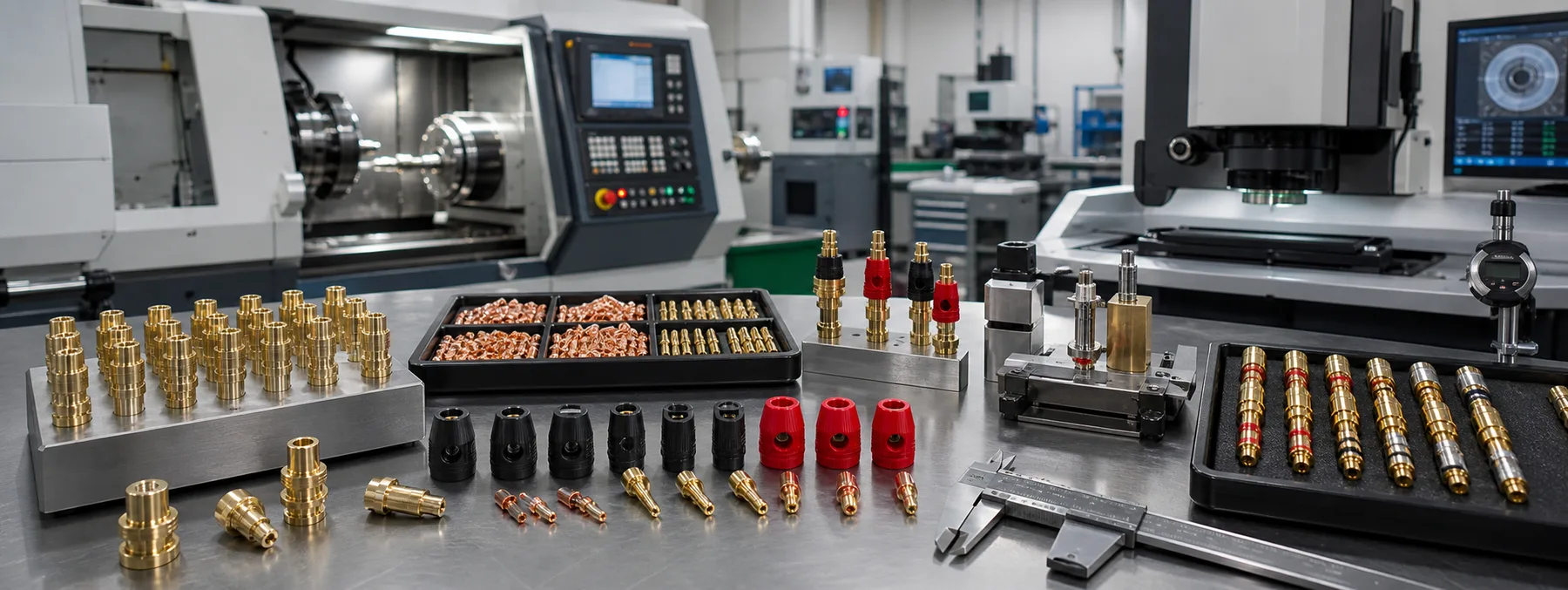
Process media should help buyers confirm the supplier is relevant to terminal component projects.
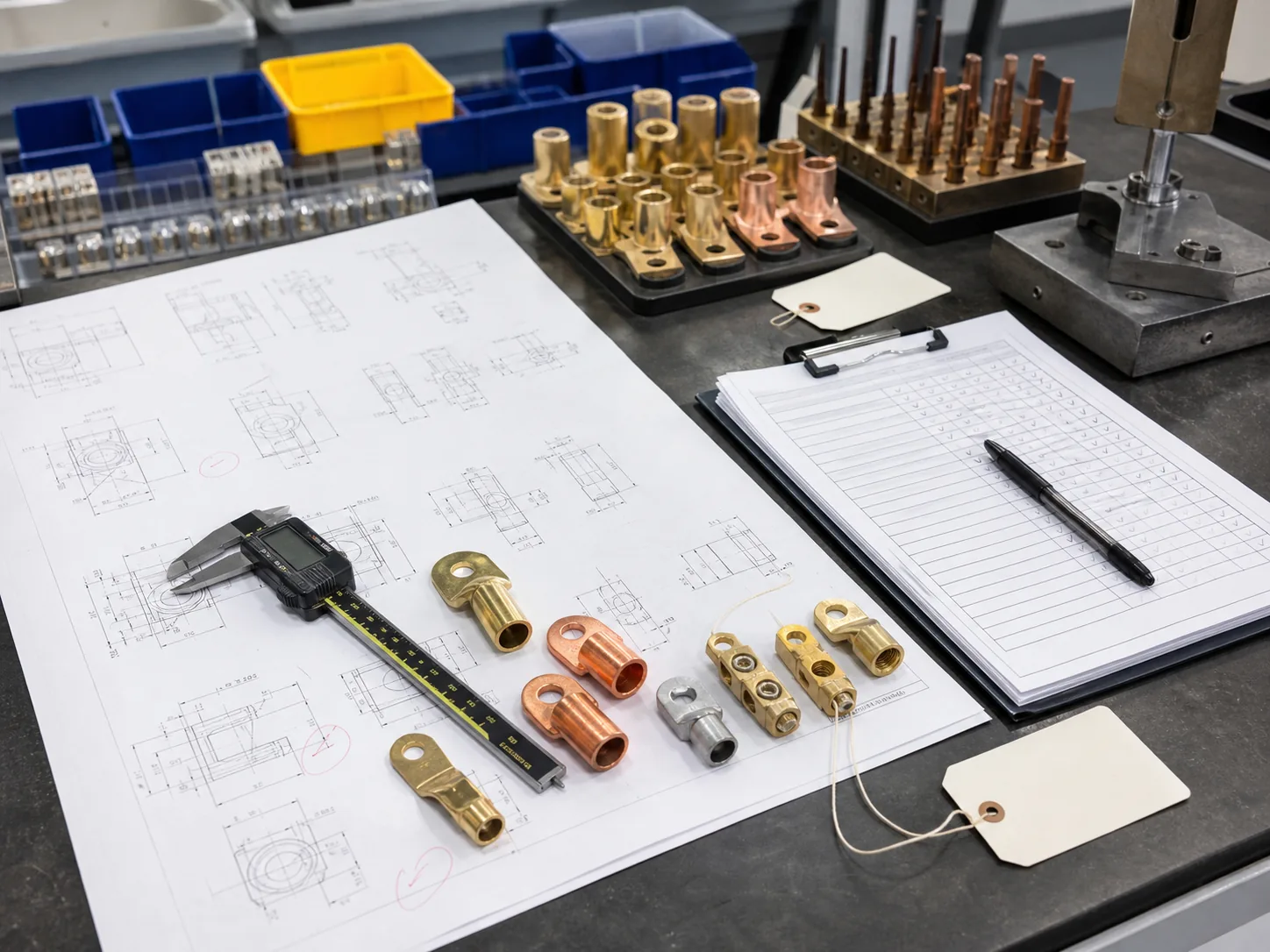
Useful supplier conversations start from drawings, samples, interfaces, and revision control.
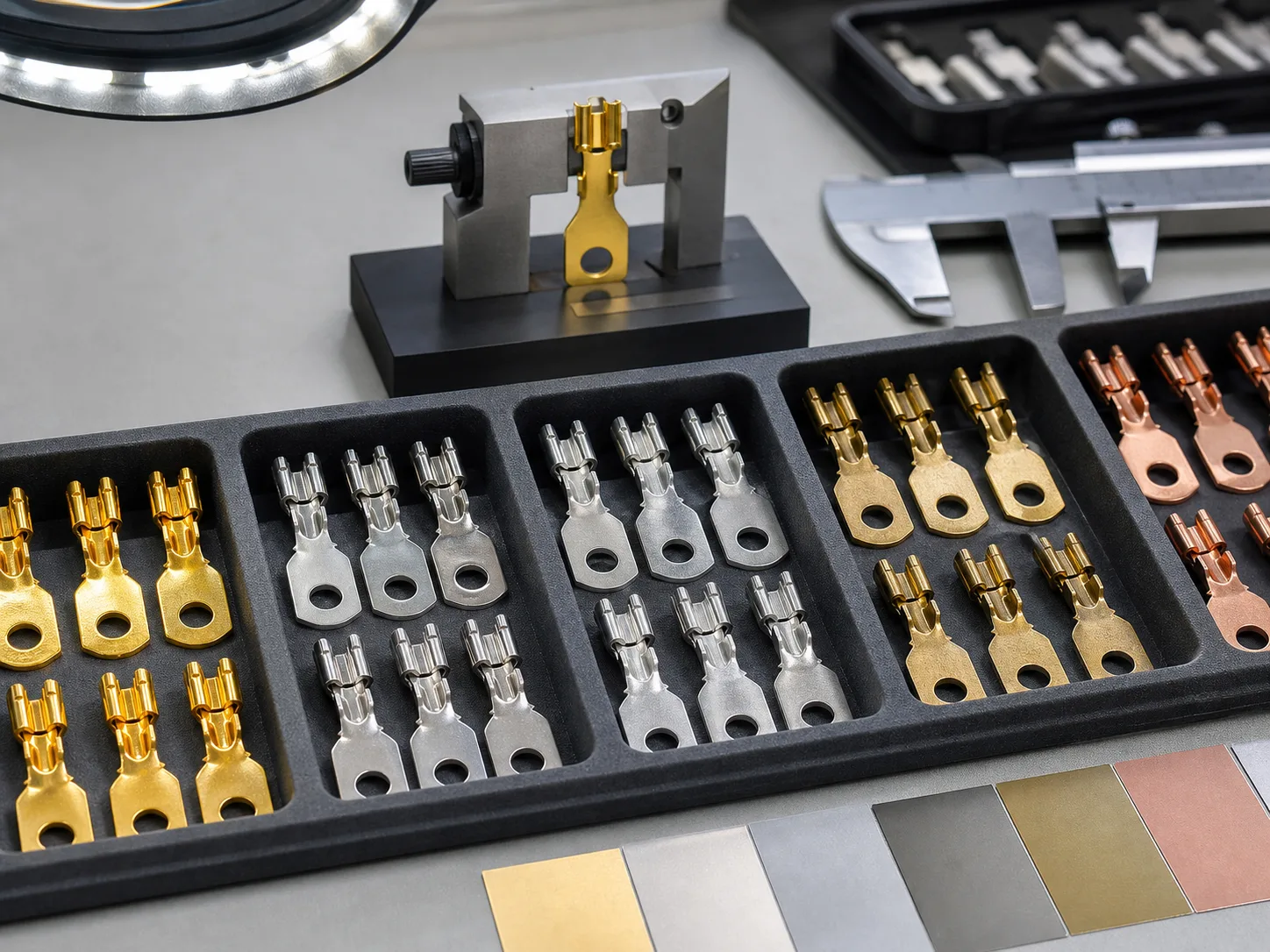
Quality evidence should cover dimensions, threads, finishes, contact zones, and sample approval.
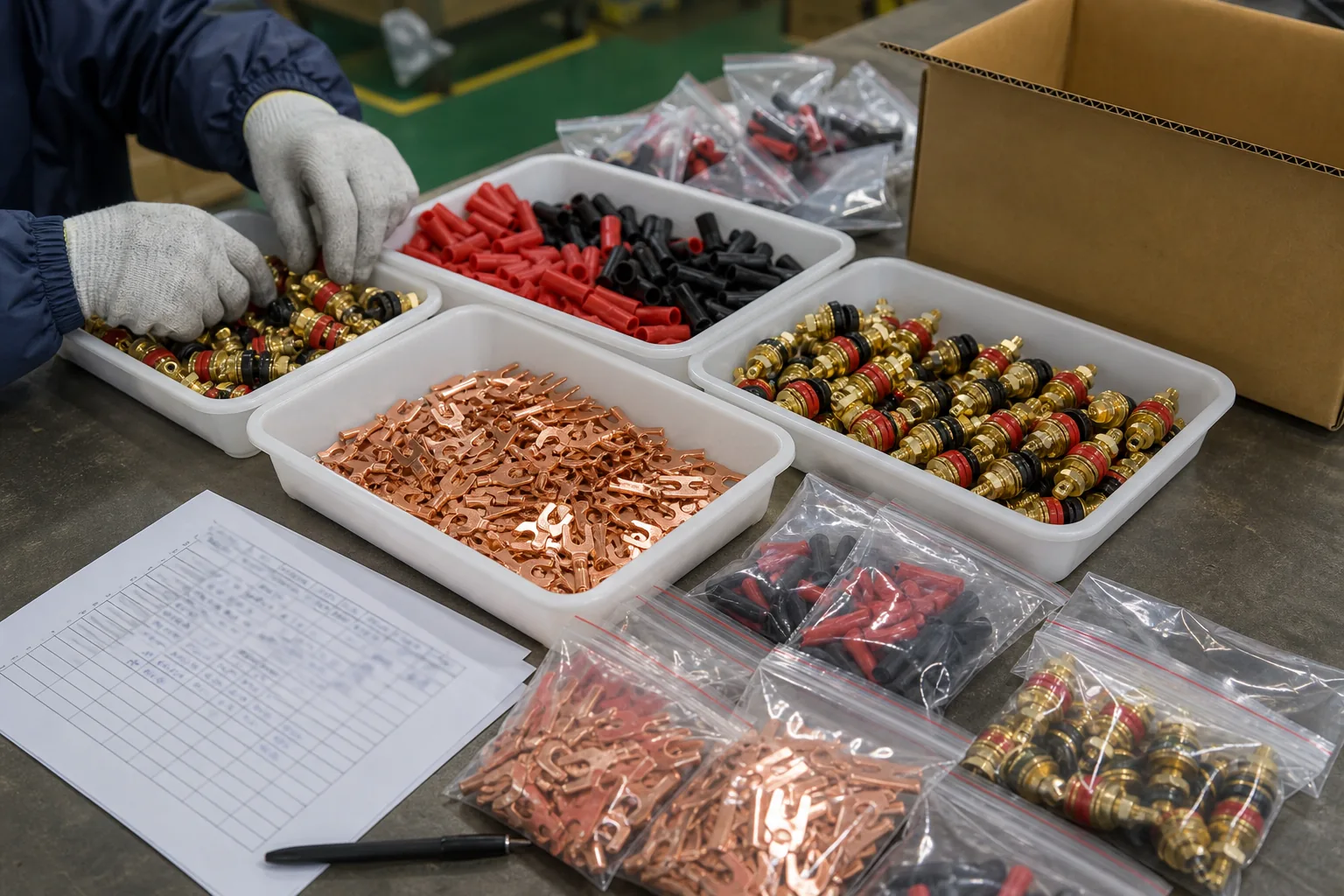
Packaging, labels, separated parts, and repeat-order controls reduce supplier risk after approval.
Drawing and Specification Package
RFQ quality improves when engineering, purchasing, and quality teams agree on the same drawing, inspection, and approval basis before samples move into production.
Drawing, STEP/IGES model, sample photo, mating part, panel layout, or dimensioned sketch used as the review basis.
Metal grade, insulation material, plating route, visible zones, contact zones, color requirements, and compliance notes.
Critical dimensions, thread fit, contact surface, insulation fit, assembly sequence, appearance standard, and packaging check.
Sample approval, revision reference, change-control note, packaging instruction, and repeat-order acceptance criteria.
Next Step
About pages often end too softly. These paths move buyers toward product fit, manufacturing proof, or RFQ review.
Start with binding posts, banana plugs, spade connectors, high-current terminals, or custom terminal components.
Review path ->Review CNC, brass, copper, insulation, plating, assembly, and OEM development capability.
Review path ->Use the RFQ path when you have a drawing, sample, quantity range, or undefined OEM project.
Review path ->Send drawings, samples, quantity range, material, finish, and application details for a manufacturing review.
Discuss Your ProjectKnowledge Base
Use these resources to prepare cleaner RFQs, compare manufacturing routes, and reduce review back-and-forth before sampling.
Supplier review checklist for drawings, materials, plating, samples, inspection, capacity, and quotations.
Read resource ->Interface guide covering banana plugs, spade lugs, bare wire, pin connectors, and OEM review points.
Read resource ->Practical answers for engineering and purchasing teams before sending a drawing-based RFQ.
Read resource ->